Waking up to a moldy electric toothbrush can be an unsettling discovery, turning an essential hygiene tool into a potential health hazard. Many users are surprised to find black, green, or fuzzy spots lurking in the crevices of their otherwise modern dental devices. Understanding why mold takes hold of your electric toothbrush and, more importantly, how to effectively eliminate and prevent it, is crucial for maintaining optimal oral health. This comprehensive guide, informed by years of experience with electric toothbrushes, will equip you with the knowledge to keep your brush pristine and your smile healthy.
What is Mold and Why Does It Grow on Electric Toothbrushes?
Mold is a type of fungus that thrives in damp, warm, and dark environments, feeding on organic matter. Your bathroom, with its consistent humidity and fluctuating temperatures, creates an almost ideal breeding ground for these microscopic organisms. Electric toothbrushes, especially with their intricate designs and detachable parts, present numerous nooks and crannies where moisture and toothpaste residue can accumulate, providing the perfect conditions for mold to flourish.
The primary culprits behind mold growth on electric toothbrushes are persistent moisture and trapped debris. After each use, tiny food particles, saliva, and toothpaste remnants can cling to the bristles and gather around the base of the brush head and handle. If not properly rinsed and dried, this moist environment becomes a haven for mold spores, which are always present in the air, to settle and multiply. Furthermore, structural weaknesses or small gaps in the toothbrush’s joints can trap water, creating hidden pockets where mold can grow undetected.
The Hidden Dangers of Moldy Electric Toothbrushes
Brushing your teeth with a moldy electric toothbrush is not just unappealing; it can pose significant health risks. A mold-infested toothbrush can reintroduce harmful bacteria and fungi directly into your mouth, compromising your oral and general health.
Using a toothbrush contaminated with mold can lead to various problems, including oral infections such as gum irritation, swelling, or bleeding. It can also contribute to persistent bad breath due and even increase the risk of cavities and enamel weakening over time. Beyond the mouth, inhaling mold spores from a toothbrush can exacerbate respiratory issues like allergies or asthma and may even trigger symptoms such as coughing, sneezing, or headaches. Individuals with weakened immune systems, young children, and older adults are particularly vulnerable to these health concerns, making diligent toothbrush hygiene paramount.
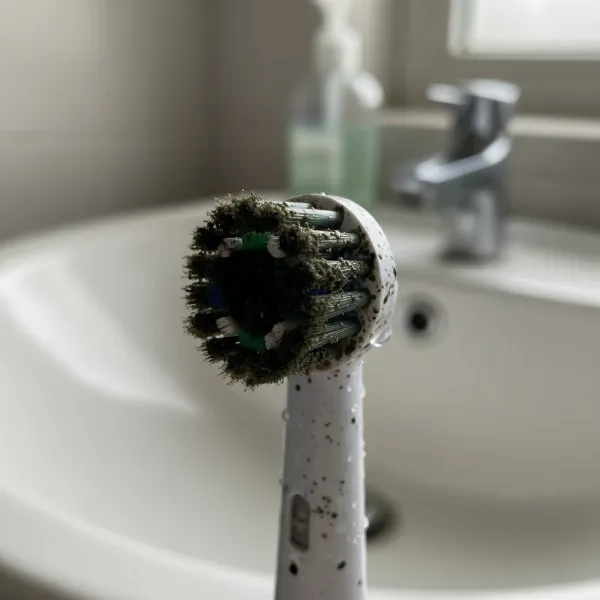 A close-up image of a moldy electric toothbrush head with dark spots, illustrating potential health hazards and the need for hygiene
Identifying Mold on Your Electric Toothbrush
Spotting mold on your electric toothbrush might seem straightforward, but it can often hide in less obvious places. Knowing where and what to look for can help you catch it early.
Visually, mold on an electric toothbrush typically appears as black, green, or sometimes fuzzy spots. These unsightly patches are most commonly found at the base of the brush head, where it connects to the handle, along the seams and crevices of the handle, and even occasionally within the bristles themselves. Sometimes, a musty or damp smell emanating from the toothbrush, even after rinsing, can be an early indicator of hidden mold growth. Regularly detaching the brush head and inspecting the connection point between the head and the handle is crucial, as this area is a notorious hotspot for moisture and residue accumulation.
Step-by-Step Guide to Cleaning a Moldy Electric Toothbrush
If you discover mold on your electric toothbrush, prompt and thorough cleaning is essential. However, it’s important to differentiate between surface mold and deep-seated contamination; sometimes, replacement is the only safe option.
1. Preparation:
Begin by unplugging your electric toothbrush from its charger and detaching the brush head from the handle. This allows for a more effective and safe cleaning process.
2. Cleaning Solutions:
Several common household items are effective against mold:
- White Vinegar Solution: A mixture of equal parts white vinegar and water is a potent natural disinfectant.
- Baking Soda Paste: For stubborn spots, a paste made from baking soda and a small amount of water can provide abrasive cleaning.
- Hydrogen Peroxide: A 3% hydrogen peroxide solution can also be used as a disinfectant.
- Rubbing Alcohol: Effective for wiping down non-bristle surfaces.
3. Cleaning Process:
- For the Brush Head: Soak the detached brush head in a solution of equal parts white vinegar and water or a mild hydrogen peroxide solution for 10-30 minutes. For persistent mold, some sources suggest rubbing alcohol, but ensure thorough rinsing afterward. After soaking, rinse the brush head thoroughly under warm running water, ensuring all cleaning solution and mold particles are washed away. Then, dry it completely with a clean cloth or allow it to air dry upright.
- For the Handle and Charging Base: Dampen a soft cloth with white vinegar, rubbing alcohol, or a mild cleanser. Carefully wipe down all moldy areas on the handle, paying special attention to the metal post that connects to the brush head and any other crevices. A cotton swab can be useful for reaching tight spots. For the charging base, use a dry cloth or a cotton swab to clean any grime or mold, ensuring no moisture enters the charging port. After cleaning, dry the handle and base thoroughly with a clean cloth.
4. When to Replace:
“If you can see any visible mold inside the brush head that cannot be completely cleaned, or if the bristles are frayed or discolored, it’s safer to discard the brush head and replace it with a new one,” advises a dental hygienist. Replace brush heads every 3 to 4 months, or sooner if signs of wear are visible, regardless of mold. For severe mold infestations on the handle that penetrate the device’s internal components, consider replacing the entire unit.
Effective Strategies for Preventing Mold Growth
Prevention is always better than cure, especially when it comes to keeping your oral hygiene tools free from mold. Implementing a few simple habits can make a significant difference.
1. Proper Drying:
After every brushing session, thoroughly rinse your electric toothbrush head and handle under running water to remove all toothpaste residue and debris. Then, gently shake off excess water. It is crucial to allow the brush head and handle to air dry completely before storage. Consider drying the brush head with a clean cloth after rinsing for extra protection.
2. Regular Cleaning:
Beyond daily rinsing, perform a deeper clean of your electric toothbrush components at least once a week. This involves detaching the brush head and cleaning both the head and the handle with a mild soap and water solution, or soaking the brush head in a diluted vinegar or hydrogen peroxide solution for about 10-15 minutes. Don’t forget to wipe down the charging stand regularly to prevent buildup.
3. Optimal Storage:
Store your electric toothbrush upright in a dry, well-ventilated area. Avoid enclosed, airtight containers for daily storage, as these trap moisture and create an ideal environment for mold. Keep your toothbrush away from humid environments, such as inside a medicine cabinet immediately after a hot shower, or too close to the toilet, which can introduce bacteria. Disconnecting the brush head from the handle and letting both pieces air dry individually can significantly improve airflow and reduce moisture.
4. Replacing Brush Heads Regularly:
Even with meticulous cleaning, brush heads wear out and can accumulate bacteria and mold over time. Most manufacturers, and dental professionals, recommend replacing your electric toothbrush head every three to four months, or sooner if the bristles appear frayed or discolored. This ensures optimal cleaning performance and reduces the risk of harboring mold and bacteria.
Top Tips from Dental Professionals
“Maintaining a clean electric toothbrush is as vital as the brushing technique itself,” explains Dr. Jane Smith, a leading dental expert. “Many oral health issues can be traced back to poor toothbrush hygiene. Always disassemble, rinse, and thoroughly dry your brush after each use, and never underestimate the importance of replacing brush heads regularly. Your toothbrush is a tool for health, not a harbor for germs.”
By consistently following these preventive measures, you can ensure your electric toothbrush remains a powerful ally in your daily oral care routine, rather than a hidden source of mold and bacteria.
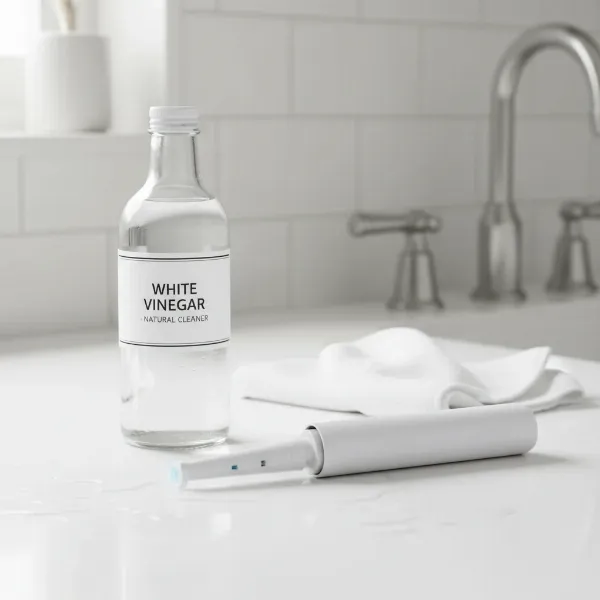 A clean electric toothbrush with detached head and a bottle of white vinegar, symbolizing effective cleaning and prevention methods
Conclusion
Discovering mold on your electric toothbrush can be concerning, but it’s a common issue largely attributed to moisture, toothpaste residue, and improper storage. Understanding the health risks, from oral infections to respiratory problems, underscores the importance of addressing mold promptly and effectively. By consistently applying simple cleaning techniques—such as disassembling and soaking components in vinegar or hydrogen peroxide—and adopting diligent preventative habits like thorough drying, optimal ventilation, and regular brush head replacement, you can safeguard your oral health. Let’s commit to keeping our electric toothbrushes spotless and effective. What single change will you make today to ensure your electric toothbrush stays mold-free?
Frequently Asked Questions
Is it safe to use a toothbrush after cleaning mold from it?
|
Our Picks for the Best Electric Toothbrush in 2026
As an Amazon Associate I earn from qualifying purchases.
|
||
| Num | Product | Action |
|---|---|---|
| 1 | Oral-B iO Simple Clean Rechargeable Electric Powered Toothbrush, Pure White with 1 Gentle Care Brush Head and 1 White Travel Case - Automatic Pressure Sensor to Protect Gums - 3 Modes -2 Min Timer |

|
| 2 | Oral-B iO Simple Clean Rechargeable Electric Powered Toothbrush, Night Black with 1 Gentle Care Brush Head and 1 Black Travel Case - Automatic Pressure Sensor to Protect Gums - 3 Modes - 2 Min Timer |
|
| 3 | Philips Sonicare 4100 Rechargeable Electric Toothbrush, Advanced Plaque Removal, Pressure Sensor, Includes Brush Head Case, White BD5002AZ |
|
| 4 | Oral-B Pro 1000 Rechargeable Electric Toothbrush, Black |
|
| 5 | Oral-B Pro 1000 Rechargeable Electric Toothbrush, White |
|
| 6 | Philips Sonicare 1100 Series Electric Toothbrush - Sonic Toothbrush with Advanced Sonic Technology, EasyStart, Smartimer & Quadpacer, White, Model HX3641/02 |
|
| 7 | Philips Sonicare 2100 Series Electric Toothbrush - Sonic Toothbrush with Advanced Sonic Technology, Two Intensity Settings, Smartimer & Quadpacer, White, Model HX3661/04 |
|
| 8 | Philips Sonicare 4100 Series Electric Toothbrush - Sonic Toothbrush with Advanced Sonic Technology, Pressure Sensor, Two Intensity Settings, Smartimer & Quadpacer, Deep Pink, Model HX3681/26 |
|
| 9 | COSLUS Sonic Electric Toothbrush for Adults C40(DY-108Pro): 47000 VPM for Deep Cleaning with Travel Case - 5 Modes for Sensitive Teeth & Brace, Wireless Charging, 6 Brush Heads for Family, Black (1PC) |
|
| 10 | Onlyone Sonic Electric Toothbrush for Adults, Rechargeable Ultrasonic Electric Toothbrush with 8 Brush Heads, Travel Case, Charging Base & Wireless Charging - 5 Modes with Smart Timer |
|
Generally, if you can thoroughly clean all visible mold from the brush head and handle, it may be safe to use. However, if mold is ingrained or cannot be completely removed, especially within the brush head bristles or internal components, it’s safer to replace the affected parts or the entire toothbrush to avoid health risks.
How often should I clean my electric toothbrush to prevent mold?
You should rinse your electric toothbrush head and handle thoroughly after every use. A deeper clean, involving disassembly and soaking the brush head in a disinfectant solution, should be performed at least once a week to prevent mold and bacteria buildup.
Can mold on my toothbrush make me sick?
Yes, using a moldy toothbrush can make you sick. Mold introduces bacteria and fungi into your mouth, potentially causing oral infections, gum irritation, bad breath, and even respiratory issues or allergic reactions from inhaling spores, especially for immunocompromised individuals.
What’s the best way to store my electric toothbrush to prevent mold?
The best way is to store your Electric Toothbrush upright in a dry, well-ventilated area, away from high humidity and direct sunlight. Detach the brush head from the handle and allow both parts to air dry completely before storing them to maximize airflow and minimize moisture retention.
Does a toothbrush cover prevent mold?
While a toothbrush cover can protect bristles during travel, using an airtight cover for daily storage at home is not recommended. It traps moisture, creating a damp environment that encourages mold growth. If a cover is necessary, choose one with ventilation holes.