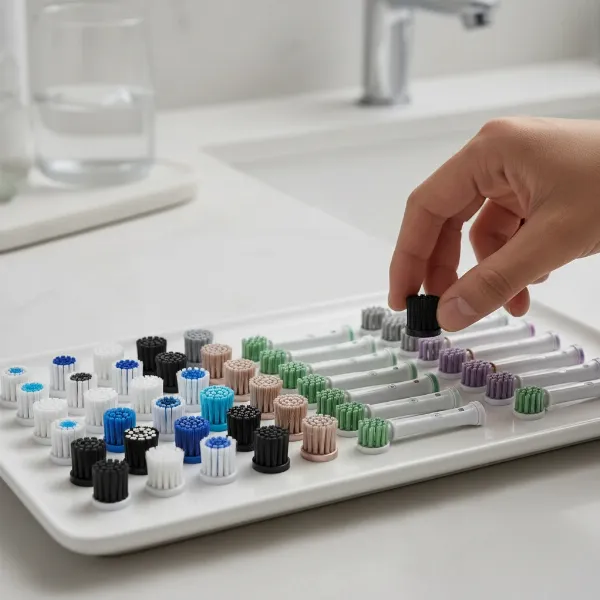
Electric toothbrushes have revolutionized our approach to oral care, offering superior plaque removal and a host of smart features designed to enhance brushing habits. Yet, for many households, the question arises: can we share the electric toothbrush handle to save on cost or space? While the ideal scenario involves each individual owning their complete electric toothbrush unit, practical considerations often lead families to explore sharing the handle with separate brush heads. This guide delves into the nuances of this practice, offering essential hygienic protocols if you choose to share, alongside a candid look at the potential risks and best alternatives.
Understanding Electric Toothbrushes: Beyond the Bristles
An electric toothbrush is more than just a vibrating stick; it’s a sophisticated device comprising a handle, which houses the motor and battery, and a detachable brush head with bristles. These components work in concert to deliver dynamic cleaning action, whether through oscillating-rotating movements or high-frequency sonic vibrations. Each part plays a crucial role, and understanding their function helps appreciate why dental hygiene demands careful consideration, especially when it comes to sharing. The brush head is the part that makes direct contact with your teeth and gums, while the handle is the motor that powers the cleaning action.
The Allure of Electric Toothbrushes and Reasons for Handle Sharing
Electric toothbrushes offer a multitude of benefits over manual brushing, from significantly improved plaque removal and healthier gums to integrated timers and pressure sensors that guide optimal brushing technique. They are particularly beneficial for individuals with dexterity issues or those looking to upgrade their oral hygiene routine.
For many, the appeal of sharing an electric toothbrush handle stems from practical reasons. The initial cost of a high-quality electric toothbrush can be substantial, making the purchase of a single handle and multiple brush heads a more budget-friendly option for families or couples. Additionally, sharing a handle can reduce bathroom clutter and be more convenient for travel, as only one charging base might be needed. These factors often lead individuals to seek ways to make handle sharing as hygienic as possible.
 A family sharing an electric toothbrush handle with different colored brush heads.
Why Dental Professionals Advise Against Sharing (Even the Handle)
Despite the practical advantages, dental and health organizations, such as the American Dental Association (ADA), generally advise against sharing toothbrushes altogether. This recommendation extends beyond just the brush head to include concerns about the handle itself, even when separate heads are used. The primary concern is the potential for cross-contamination and the transfer of various microorganisms.
Microorganisms, including bacteria, viruses, and fungi like MRSA and Candida, can reside on the toothbrush handle, especially in moist bathroom environments. While rinsing the handle might seem sufficient, these pathogens can transfer between users, particularly if there are open sores in the mouth or bleeding gums.
Beyond microbial transfer, another significant, often overlooked drawback of sharing an electric toothbrush handle is the mechanical stress it places on the device. Electric toothbrushes are engineered for optimal performance with minimal disruption to their internal mechanisms. Frequently attaching and detaching brush heads puts considerable mechanical stress on the metal shaft and rubber seals that connect the head to the body. Over time, this wear and tear can lead to a loosened shaft, compromised seals, and reduced motor efficiency, resulting in issues like unusual noise, erratic vibrations, and ultimately, premature device failure within 12 to 18 months. Manufacturers typically design their products assuming individual ownership for long-term durability.
Furthermore, for smart electric toothbrushes equipped with Bluetooth connectivity and companion apps, sharing a single handle means that all brushing data gets combined. This makes it impossible for the app to differentiate between individual users, negating the personalized tracking and feedback features that are a core benefit of these advanced devices.
Hygienic Protocols for Sharing an Electric Toothbrush Handle (If You Must)
If circumstances necessitate sharing an electric toothbrush handle, adhering to stringent hygienic protocols is crucial to minimize risks. While an individual electric toothbrush for each person remains the gold standard, these practices can help if sharing.
1. Always Use Individual Brush Heads: This is the most critical and non-negotiable rule. Each user must have their own distinct brush head, easily identifiable by unique colors or markings. Never, under any circumstances, share a brush head.
2. Thorough Cleaning After Each Use:
- Rinse: After removing the brush head, thoroughly rinse the handle under running water. Pay close attention to the area where the brush head attaches, as this is where toothpaste residue and moisture can accumulate. Avoid submerging the entire handle in water unless the manufacturer explicitly states it’s fully waterproof.
- Wipe Down: Use an antibacterial wipe or an alcohol-soaked cotton pad to clean the entire handle surface. This helps disinfect the parts frequently touched by different users.
3. Proper Storage:
- Air Dry: After cleaning, store the handle upright in a clean, dry area where it can air dry completely. Storing a moist toothbrush in a closed container creates an ideal breeding ground for microbial growth.
- Separate Brush Heads: Store individual brush heads separately from each other and from the handle. Dedicated brush head holders with covers or dividers are ideal to prevent cross-contamination and allow for proper air circulation.
- Location Matters: Keep the handle and brush heads away from the toilet to prevent airborne germs from settling on them.
4. Regular Deep Cleaning of the Handle and Charger Base:
- Handle: At least once a week, perform a more thorough cleaning of the handle using a damp cloth and a mild, non-abrasive soap. Ensure all nooks and crannies are cleaned, especially around buttons and charging ports.
- Charger Base: The charger base often accumulates grime and toothpaste residue. Placing a cotton pad with a small hole cut for the charging peg can help keep the base cleaner. Replace the cotton pad regularly. For existing buildup, a damp cloth and gentle scrubbing can help.
5. Hand Hygiene: Always wash your hands thoroughly with soap and water before and after handling the electric toothbrush, especially when attaching or detaching brush heads.
6. Avoid Sharing During Illness: If anyone in the household is ill, particularly with an oral infection, cold sore, or a respiratory illness, it is strongly advised to refrain from sharing the handle altogether. During such times, switch to separate, inexpensive manual toothbrushes for temporary use.
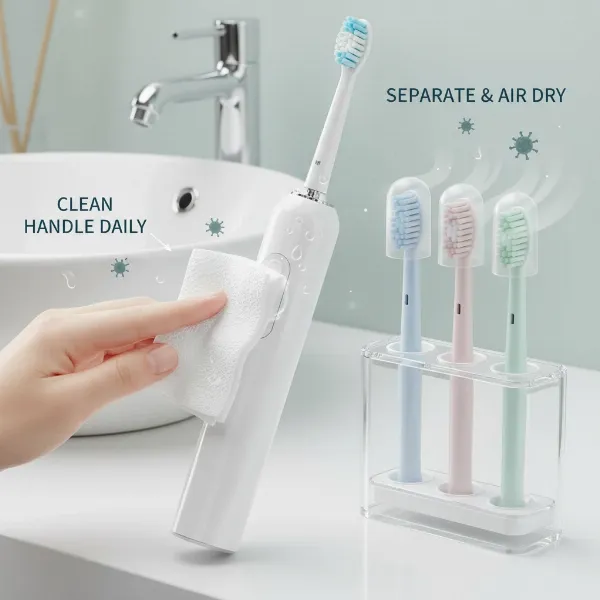 Proper cleaning and storage of an electric toothbrush handle and individual brush heads.
Alternatives to Sharing a Single Electric Toothbrush Handle
Given the potential hygienic and mechanical drawbacks of sharing a single electric toothbrush handle, exploring alternatives is a wise investment in long-term oral health and appliance longevity.
- Individual Electric Toothbrushes: The most recommended solution is for each family member to have their own complete electric toothbrush unit. Many reputable brands offer entry-level electric toothbrushes at affordable price points, making individual ownership more accessible than ever.
- Family Packs or Dual Handle Sets: Some manufacturers recognize the family dynamic and offer bundles that include two handles and multiple brush heads, or charging stations designed to accommodate multiple brushes. These are excellent options that provide individual brushes while sometimes offering a slight cost saving compared to buying two separate premium units.
- Dedicated Manual Toothbrushes for Travel/Spares: If individual electric toothbrushes are not feasible for everyone, ensure that each person has their own manual toothbrush for travel or as a backup. This can be a practical solution for scenarios where one handle might be away or if a user prefers a manual brush on occasion.
Choosing the Right Electric Toothbrush for Your Household
When selecting electric toothbrushes for your family, consider individual needs such as gum sensitivity, specific cleaning modes (e.g., whitening, gum care), and smart features like pressure sensors or app connectivity. Research reputable brands known for their durability and customer support. Checking warranty information and reading user reviews can also provide valuable insights, ensuring you invest in products that meet both your family’s oral health requirements and your hygiene standards.
Conclusion
While the convenience and cost savings of sharing an electric toothbrush handle can be appealing, it’s essential to approach this practice with a clear understanding of the associated risks. Dental professionals generally advocate for individual toothbrushes to prevent the transfer of microorganisms and bodily fluids. If sharing the handle is unavoidable, meticulous hygiene, including thorough cleaning after each use, proper storage, and regular deep cleaning, is paramount to mitigate potential health concerns. Furthermore, be aware of the mechanical wear and tear that frequent head swapping can inflict on the device, potentially shortening its lifespan and affecting performance. Ultimately, investing in individual electric toothbrush handles, where feasible, offers the most hygienic and durable solution for maintaining optimal oral health for every member of your household.
How do you prioritize oral hygiene for your family, especially when considering the latest dental tech?
Frequently Asked Questions
Is it really unhygienic to share an electric toothbrush handle?
|
Our Picks for the Best Electric Toothbrush in 2026
As an Amazon Associate I earn from qualifying purchases.
|
||
| Num | Product | Action |
|---|---|---|
| 1 | Oral-B Pro 1000 Rechargeable Electric Toothbrush, Black |

|
| 2 | Oral-B Pro 1000 Rechargeable Electric Toothbrush, White |
|
| 3 | Philips Sonicare 4100 Rechargeable Electric Toothbrush, Advanced Plaque Removal, Pressure Sensor, Includes Brush Head Case, White BD5002AZ |
|
| 4 | Philips Sonicare 2100 Series Electric Toothbrush - Sonic Toothbrush with Advanced Sonic Technology, Two Intensity Settings, Smartimer & Quadpacer, White, Model HX3661/04 |
|
| 5 | COSLUS Sonic Electric Toothbrush for Adults C40(DY-108Pro): 47000 VPM for Deep Cleaning with Travel Case - 5 Modes for Sensitive Teeth & Brace, Wireless Charging, 6 Brush Heads for Family, Black (1PC) |
|
| 6 | Oral-B iO Simple Clean Rechargeable Electric Powered Toothbrush, Pure White with 1 Gentle Care Brush Head and 1 White Travel Case - Automatic Pressure Sensor to Protect Gums - 3 Modes -2 Min Timer |
|
| 7 | Oral-B iO Simple Clean Rechargeable Electric Powered Toothbrush, Night Black with 1 Gentle Care Brush Head and 1 Black Travel Case - Automatic Pressure Sensor to Protect Gums - 3 Modes - 2 Min Timer |
|
| 8 | Philips Sonicare 4100 Series Electric Toothbrush - Sonic Toothbrush with Advanced Sonic Technology, Pressure Sensor, Two Intensity Settings, Smartimer & Quadpacer, Deep Pink, Model HX3681/26 |
|
| 9 | Onlyone Sonic Electric Toothbrush for Adults, Rechargeable Ultrasonic Electric Toothbrush with 8 Brush Heads, Travel Case, Charging Base & Wireless Charging - 5 Modes with Smart Timer |
|
| 10 | Philips Sonicare 1100 Series Electric Toothbrush - Sonic Toothbrush with Advanced Sonic Technology, EasyStart, Smartimer & Quadpacer, White, Model HX3641/02 |
|
While sharing the brush head is a definite no, sharing the handle, even with separate heads, carries potential hygiene risks. Microorganisms can transfer via the handle, especially if not thoroughly cleaned after each use. Dental professionals recommend individual toothbrushes for optimal hygiene.
How often should I clean the electric toothbrush handle?
The electric toothbrush handle should be rinsed and wiped down with an antibacterial wipe or alcohol swab after each use. A deeper cleaning of the handle and its charging base with mild soap should be performed at least once a week to prevent gunk buildup and maintain cleanliness.
Can sharing an electric toothbrush handle damage the device?
Yes, frequently detaching and reattaching brush heads can cause significant mechanical stress on the metal shaft and internal components of the electric toothbrush handle. This wear and tear can lead to a loosened shaft, unusual noise, erratic vibrations, and ultimately shorten the device’s lifespan to 12-18 months.
What about smart electric toothbrushes and sharing?
Sharing a smart Electric Toothbrush handle, even with individual brush heads, will merge all brushing data into a single profile. This prevents the associated app from accurately tracking individual brushing habits, progress, and providing personalized feedback, thereby undermining a key benefit of smart toothbrushes.
What are the absolute essentials for sharing an electric toothbrush handle safely?
The absolute essentials include each user having their own dedicated brush head, thoroughly rinsing and wiping the handle after every use, and storing the handle and heads separately in an upright position to air dry. Avoiding sharing during illness is also crucial.