Have you ever experienced the frustration of your electric toothbrush dying mid-brush, leaving you with a half-cleaned smile and a feeling of incompleteness? The longevity and performance of your electric toothbrush are intricately linked to its power source. In the world of rechargeable electric toothbrushes, two primary battery technologies dominate the market: Nickel-Metal Hydride (NiMH) and Lithium-ion (Li-ion). Understanding the distinctions between these two can significantly impact your daily oral hygiene routine and the overall value you get from your device. This comprehensive guide will delve into the characteristics, advantages, and disadvantages of both battery types, empowering you to make an informed choice that best suits your needs.
Understanding Electric Toothbrush Batteries: A Core Component
The battery in your electric toothbrush is more than just a power source; it’s a critical component influencing everything from cleaning efficacy to convenience and device lifespan. A robust battery ensures consistent power output, which is essential for effective plaque removal and for powering advanced features like pressure sensors and multiple brushing modes. Conversely, an inferior battery can lead to weaker vibrations, shorter brushing sessions, and the inconvenience of frequent recharges, diminishing the overall effectiveness of your oral care.
NiMH Batteries: The Traditional Powerhouse
Nickel-Metal Hydride (NiMH) batteries represent a foundational technology in rechargeable devices. Developed as an evolution from older Nickel-Cadmium (NiCd) batteries, NiMH cells utilize a hydrogen-absorbing alloy at their negative terminal and nickel oxide hydroxide at their positive terminal. They became a popular choice for household electronics, digital cameras, and cordless phones due to their reliability and relatively lower cost. In the realm of electric toothbrushes, NiMH batteries were once the standard, particularly in older or more budget-friendly models.
Advantages of NiMH Batteries
Historically, NiMH batteries have offered several appealing benefits:
- Cost-Effective: Electric toothbrushes featuring NiMH batteries often come with a lower initial price point, making them accessible to a broader range of consumers.
- Wide Availability: NiMH technology is mature and widely adopted, meaning devices powered by these batteries are generally easy to find.
- Relative Safety: NiMH batteries are generally considered stable under various conditions and are less prone to the thermal runaway issues that sometimes plagued earlier lithium battery designs. They are more forgiving of physical or thermal stress.
- Moderate Performance: They provide a reliable power source, offering good performance for devices with consistent, moderate energy demands.
|
Our Picks for the Best Electric Toothbrush in 2026
As an Amazon Associate I earn from qualifying purchases.
|
||
| Num | Product | Action |
|---|---|---|
| 1 | Philips Sonicare 4100 Rechargeable Electric Toothbrush, Advanced Plaque Removal, Pressure Sensor, Includes Brush Head Case, White BD5002AZ |

|
| 2 | Philips Sonicare 2100 Series Electric Toothbrush - Sonic Toothbrush with Advanced Sonic Technology, Two Intensity Settings, Smartimer & Quadpacer, White, Model HX3661/04 |
|
| 3 | Oral-B iO Simple Clean Rechargeable Electric Powered Toothbrush, Pure White with 1 Gentle Care Brush Head and 1 White Travel Case - Automatic Pressure Sensor to Protect Gums - 3 Modes -2 Min Timer |
|
| 4 | Oral-B Pro 1000 Rechargeable Electric Toothbrush, Black |
|
| 5 | Oral-B iO Simple Clean Rechargeable Electric Powered Toothbrush, Night Black with 1 Gentle Care Brush Head and 1 Black Travel Case - Automatic Pressure Sensor to Protect Gums - 3 Modes - 2 Min Timer |
|
| 6 | COSLUS Sonic Electric Toothbrush for Adults C40(DY-108Pro): 47000 VPM for Deep Cleaning with Travel Case - 5 Modes for Sensitive Teeth & Brace, Wireless Charging, 6 Brush Heads for Family, Black (1PC) |
|
| 7 | Philips Sonicare 4100 Series Electric Toothbrush - Sonic Toothbrush with Advanced Sonic Technology, Pressure Sensor, Two Intensity Settings, Smartimer & Quadpacer, Deep Pink, Model HX3681/26 |
|
| 8 | Onlyone Sonic Electric Toothbrush for Adults, Rechargeable Ultrasonic Electric Toothbrush with 8 Brush Heads, Travel Case, Charging Base & Wireless Charging - 5 Modes with Smart Timer |
|
| 9 | Oral-B Pro 1000 Rechargeable Electric Toothbrush, White |
|
| 10 | Philips Sonicare 1100 Series Electric Toothbrush - Sonic Toothbrush with Advanced Sonic Technology, EasyStart, Smartimer & Quadpacer, White, Model HX3641/02 |
|
Disadvantages of NiMH Batteries
Despite their advantages, NiMH batteries come with several notable drawbacks that impact user experience and device longevity:
- “Memory Effect”: One of the most significant downsides is the “memory effect,” where the battery “remembers” its previous discharge point if recharged repeatedly before being fully drained. This can lead to a gradual reduction in usable capacity over time.
- Shorter Lifespan: NiMH batteries typically offer fewer charge-discharge cycles compared to Lithium-ion, often lasting around 500 cycles before significant degradation. This translates to a shorter overall lifespan for the toothbrush.
- Higher Self-Discharge Rate: When not in use, NiMH batteries lose their charge much faster, sometimes as much as 30% per month. This means your toothbrush might be dead or low on power even if it hasn’t been used in a few weeks.
- Lower Energy Density: NiMH batteries store less energy for their size and weight. This results in bulkier, heavier devices compared to those powered by Li-ion, and they might not be able to sustain powerful features as effectively.
- Slower Charging Times: Recharging NiMH batteries takes considerably longer, and they can be prone to overheating if not managed carefully during the charging process.
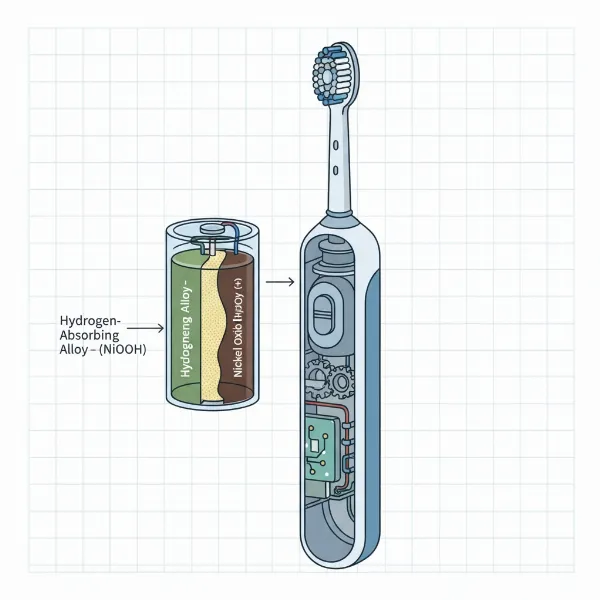 A diagram showing the internal components of a NiMH battery within an electric toothbrush handle, emphasizing its traditional technology.
Lithium-ion Batteries: The Modern Standard
Lithium-ion (Li-ion) batteries represent the cutting edge of rechargeable battery technology, revolutionizing portable electronics. They operate by moving lithium ions between positive and negative electrodes during charge and discharge cycles, allowing for highly efficient energy storage and delivery. These batteries are ubiquitous in modern devices, from smartphones and laptops to electric vehicles, and have become the preferred choice for most contemporary electric toothbrushes due to their superior performance characteristics.
Advantages of Lithium-ion Batteries
Li-ion batteries boast a range of benefits that make them ideal for advanced electric toothbrushes:
- Higher Energy Density: Lithium-ion batteries pack more power into a smaller, lighter package. This enables manufacturers to design sleeker, more ergonomic toothbrushes without sacrificing performance or battery life.
- No “Memory Effect”: Unlike NiMH, Li-ion batteries do not suffer from the “memory effect.” You can recharge them whenever convenient, regardless of their current charge level, without worrying about reducing their overall capacity.
- Longer Overall Lifespan: Li-ion batteries typically offer significantly more charge-discharge cycles, often exceeding 1,000 cycles. With proper care, they can provide consistent performance for 3 to 5 years, sometimes even outlasting the toothbrush itself.
- Faster Charging Times: These batteries can be recharged rapidly, often reaching 80% capacity in just a couple of hours and a full charge in under 3-4 hours. This convenience is a major benefit for busy users.
- Lower Self-Discharge Rate: Li-ion batteries have a very low self-discharge rate, typically 1-3% per month. This means your electric toothbrush will retain its charge much longer when not in use, always ready when you need it.
- Consistent Power Output: Lithium-ion batteries deliver stable, high-performance power throughout most of their discharge cycle. This ensures your toothbrush maintains optimal cleaning effectiveness from the first brush stroke to the last before needing a recharge.
- Supports Advanced Features: Their high energy density and consistent power enable advanced features like multiple brushing modes, pressure sensors, Bluetooth connectivity for app integration, and more powerful vibrations for enhanced cleaning.
Disadvantages of Lithium-ion Batteries
While largely superior, Li-ion batteries do have a few considerations:
- Higher Initial Cost: Electric toothbrushes equipped with Lithium-ion batteries generally have a higher upfront cost compared to their NiMH counterparts.
- Sensitivity to Extremes: Li-ion batteries can be more sensitive to extreme temperatures (both hot and cold) and physical damage. However, modern electric toothbrushes with Li-ion batteries incorporate sophisticated battery management systems (BMS) with built-in protective circuitry to mitigate risks like overcharging or overheating, ensuring safe operation.
Lithium vs. NiMH: A Head-to-Head Comparison for Electric Toothbrushes
To further clarify the distinctions, here’s a direct comparison of how NiMH and Lithium-ion batteries stack up in key areas relevant to your electric toothbrush:
| Feature | NiMH (Nickel-Metal Hydride) | Lithium-ion (Li-ion) |
|---|---|---|
| Energy Density | Lower | Higher |
| Weight & Size | Heavier, bulkier for same capacity | Lighter, more compact for same capacity |
| Charging Speed | Slower (several hours) | Faster (often 80% in 1-2 hours, full in 3-4) |
| “Memory Effect” | Yes (can occur if not fully discharged) | No |
| Self-Discharge | Higher (up to 30% per month) | Lower (1-3% per month) |
| Lifespan | Shorter (approx. 500 cycles) | Longer (1000+ cycles, 3-5+ years) |
| Cost | Lower initial cost | Higher initial cost |
| Power Output | Can drop off as charge depletes | Consistent throughout the discharge cycle |
| Environmental | Contains toxic metals | Generally more recyclable, less toxic |
 An electric toothbrush powered by a sleek, modern Lithium-ion battery, highlighting its compact design, fast charging, and advanced features.
Maximizing Your Electric Toothbrush Battery Life
Regardless of the battery type, proper care can significantly extend the life and performance of your electric toothbrush.
Best Charging Practices
- Follow Manufacturer Instructions: Always adhere to the charging guidelines provided by your toothbrush manufacturer.
- Avoid Overcharging Li-ion (Modern Protection): While older advice suggested avoiding leaving Li-ion devices on the charger, most modern electric toothbrushes with Li-ion batteries have built-in protection circuitry to prevent overcharging once the battery is full. However, unplugging after a full charge can still be a good practice for general battery health.
- Consider Occasional Full Discharge for NiMH: If you have an older toothbrush with a NiMH battery, periodically allowing it to fully discharge before recharging can help mitigate the “memory effect” and maintain its capacity.
- Keep Contacts Clean: Regularly clean the charging contacts on both your toothbrush and its charging base to ensure efficient power transfer.
Storage Tips
- Room Temperature Storage: Store your electric toothbrush at room temperature. Extreme heat or cold can degrade battery performance and shorten its lifespan.
- Partial Charge for Long-Term Storage: If you plan to store your Li-ion electric toothbrush for an extended period (e.g., several months), charge it to about 50% capacity rather than fully charged or completely drained. This helps preserve battery health.
When to Replace Your Brush
Even with the best care, all batteries degrade over time. If your electric toothbrush isn’t holding a charge as long as it used to, takes an excessively long time to charge, or exhibits noticeably weaker brushing power, it’s likely time to consider replacing the battery (if replaceable) or the entire toothbrush.
Choosing the Right Electric Toothbrush: Battery Considerations
When selecting your next electric toothbrush, factoring in the battery type is crucial for long-term satisfaction:
- Your Budget: If budget is a primary concern, NiMH models might offer a more affordable entry point, though the long-term cost might be higher due to shorter lifespan and more frequent recharges.
- Usage Habits: For frequent travelers or those who prefer extended use between charges, a Lithium-ion battery’s long life and low self-discharge rate are invaluable.
- Desired Longevity: If you expect your toothbrush to perform optimally for many years, a Li-ion model is generally the more robust choice.
- Charging Convenience: If you value quick recharges and the freedom to top-up your battery whenever you want without concern for “memory effect,” Li-ion is the clear winner.
- Overall Performance Expectation: For consistent, powerful cleaning and access to advanced features, Lithium-ion-powered toothbrushes deliver a superior experience.
Top Electric Toothbrush Brands and Their Battery Choices
The trend in the electric toothbrush industry has overwhelmingly shifted towards Lithium-ion batteries. Most premium and mid-range electric toothbrushes from leading brands like Oral-B, Philips Sonicare, and SNOW now utilize Li-ion technology. This move reflects the industry’s commitment to providing users with longer battery life, faster charging, and the consistent power needed to support innovative oral care features. While some older or basic models might still feature NiMH, Lithium-ion has become the modern benchmark for performance and convenience.
Expert Insight on Battery Longevity
“The evolution of electric toothbrush batteries from NiMH to Lithium-ion has dramatically enhanced user experience, offering not just extended periods between charges but also a more consistent cleaning performance throughout the battery’s active life. This technological leap ensures that your daily brush delivers optimal results every single time.” – Dr. Sarah Jenkins, Dental Technology & Oral Health Expert
Conclusion
The choice between a Lithium-ion and NiMH battery in an electric toothbrush significantly impacts its performance, convenience, and longevity. While NiMH batteries have served us well as a cost-effective and relatively safe option, their limitations in terms of lifespan, charging speed, and the “memory effect” are increasingly apparent. Lithium-ion batteries, with their superior energy density, faster charging, longer life cycles, and consistent power delivery, have emerged as the modern standard, powering the advanced features and sleek designs that users expect today.
When you’re ready to upgrade or replace your electric toothbrush, understanding these battery differences will empower you to select a device that aligns perfectly with your lifestyle and oral health goals. Invest wisely in a battery that keeps your smile bright and your brushing routine uninterrupted. Which battery technology will power your next healthy smile?
Frequently Asked Questions
How long does an electric toothbrush battery typically last?
The lifespan varies significantly by battery type. NiMH batteries typically last about 1-2 years (around 500 charge cycles), while Lithium-ion batteries offer a longer lifespan of 3-5 years or more, often exceeding 1,000 charge cycles with proper care.
Can I replace the battery in my electric toothbrush?
For most modern electric toothbrushes, the battery is integrated and not user-replaceable. Attempting to replace it yourself can void the warranty and potentially damage the device. It’s best to consult the manufacturer or a professional for battery-related issues.
Does leaving my electric toothbrush on the charger damage the battery?
For Lithium-ion batteries in modern Electric Toothbrushes, built-in protective circuits prevent overcharging, so leaving it on the charger typically won’t cause damage. For older NiMH batteries, continuous charging after full might contribute to degradation, but most current models have improved charging management.
What is the “memory effect” in electric toothbrush batteries?
The “memory effect” primarily affects NiMH batteries. It’s a phenomenon where if the battery is repeatedly recharged after only being partially discharged, it “remembers” that lower capacity and may become unable to utilize its full potential charge. Lithium-ion batteries are not affected by this.
Why are Lithium-ion batteries more expensive?
Lithium-ion batteries involve more complex manufacturing processes and use more expensive raw materials compared to NiMH. Their higher energy density, longer lifespan, and advanced performance justify the increased cost, offering better long-term value despite the higher initial investment.
How can I tell if my electric toothbrush battery is failing?
Signs of a failing battery include a significantly shorter charge duration, noticeably weaker brushing power even after a full charge, the toothbrush taking much longer than usual to fully charge, or the device failing to hold any charge at all.