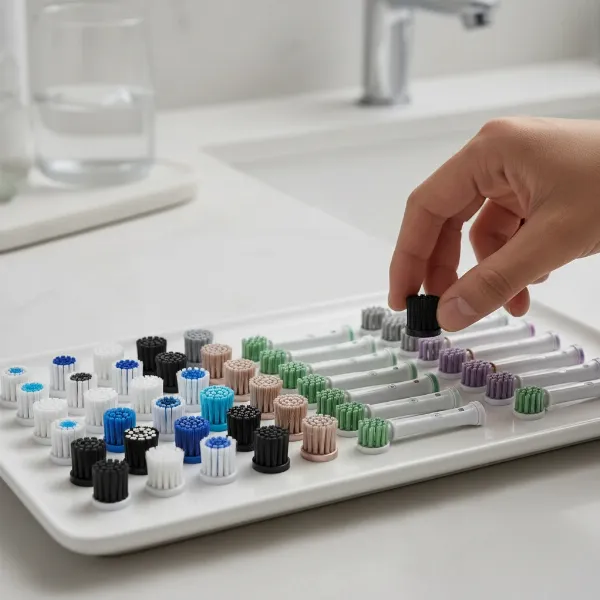
Many of us grew up believing that a firmer toothbrush meant a deeper, more effective clean for our teeth. This common misconception often leads individuals to choose medium-bristled electric toothbrush heads, thinking they are doing their oral health a favor. However, dental science and professional recommendations tell a different story. The truth about bristle firmness, especially when paired with the advanced technology of an electric toothbrush, is crucial for protecting your gums and enamel while still achieving optimal cleanliness. This article will cut through the confusion, guiding you to make an informed choice that best suits your unique oral health needs, ensuring your smile remains healthy and vibrant for years to come.
Understanding Electric Toothbrush Bristles
Electric toothbrushes have revolutionized oral hygiene, offering superior cleaning power through their consistent motion, whether oscillating-rotating or sonic vibrations. But at the heart of their effectiveness are the bristles, the small filaments designed to remove plaque and debris from your teeth and gumline. These bristles typically come in varying degrees of firmness: soft, medium, and, less commonly, hard.
Historically, bristle choices were limited, and some believed that harder bristles were necessary for effective cleaning. However, advancements in dental research and toothbrush technology have clarified that efficacy doesn’t equate to rigidity. The primary function of any bristle is to dislodge plaque, a soft, sticky film of bacteria that accumulates on tooth surfaces. Understanding the nuances of each bristle type is the first step toward optimizing your brushing routine with an electric toothbrush.
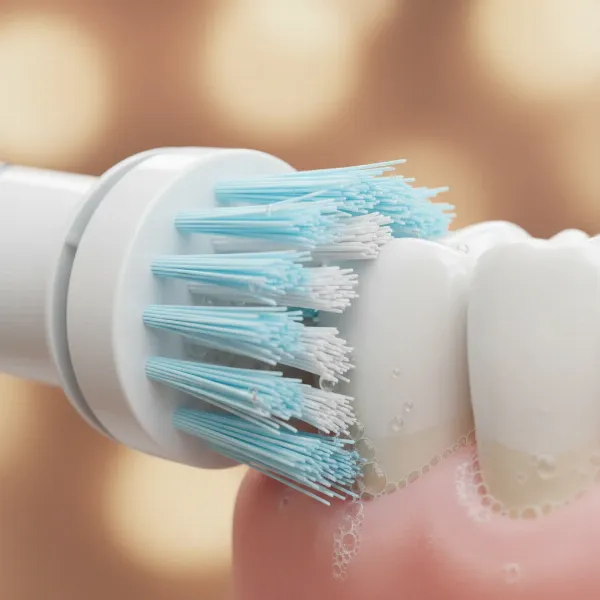 Close-up of soft bristles on an electric toothbrush head gently cleaning teeth and gums
The Unrivaled Benefits of Soft Bristles
When it comes to dental care, most professionals, including organizations like the American Dental Association (ADA), consistently advocate for soft-bristled toothbrushes for nearly all individuals. This strong recommendation stems from a wealth of research and practical experience demonstrating their superior safety and comparable effectiveness in plaque removal.
Soft bristles are engineered to be gentle on your delicate gum tissues and tooth enamel. They flex appropriately, allowing them to clean effectively along the gumline and reach into crevices without causing abrasion or irritation. For those with sensitive teeth or gums, or individuals recovering from dental procedures, soft bristles are particularly beneficial as they minimize discomfort while still ensuring a thorough clean. They are also highly effective at preserving the integrity of your enamel, preventing the gradual wear that can occur with firmer bristles. Dental studies have repeatedly shown that soft-bristled brushes are just as capable of removing plaque as their medium counterparts when used with proper technique. The key is to dislodge the soft plaque, not to scrub away at your teeth and gums with force.
The Potential Pitfalls of Medium Bristles
Despite widespread dental advice, many people still gravitate towards medium-bristled electric toothbrush heads, often under the impression that they deliver a “deeper” or more aggressive clean. This belief, however, can lead to unintended and often detrimental consequences for long-term oral health.
Medium bristles, by their very nature, are stiffer and less flexible than soft bristles. While they might feel like they are scrubbing more intensely, this increased rigidity comes with significant risks. Over time, consistent use of medium-bristled brushes, especially with even slightly excessive pressure, can cause mechanical trauma to the gums. This trauma can manifest as gum recession, a condition where the gum tissue pulls away from the tooth, exposing the more sensitive root surfaces. This not only leads to increased tooth sensitivity but also makes the teeth more vulnerable to decay and periodontal disease. Furthermore, the firmer bristles can contribute to enamel abrasion, eroding the protective outer layer of your teeth and potentially leading to notched lesions known as abfractions at the gumline.
“Plaque is soft and can be removed with gentle pressure… what you need is consistency and correct motion.” – Dr. Lena Patel, Dental Expert
This expert insight underscores that the perceived “deeper clean” of medium bristles is often unnecessary and potentially harmful. Plaque doesn’t require brute force for removal; it requires consistent, gentle, and effective brushing.
The Electric Toothbrush Advantage
Electric toothbrushes offer a significant advantage over manual brushing, largely due to their built-in technology designed to enhance cleaning efficacy while protecting oral tissues. This advantage further solidifies the recommendation for soft bristles.
Modern electric toothbrushes, whether they utilize oscillating-rotating movements or high-frequency sonic vibrations, are inherently efficient at plaque removal. Their automated motions perform thousands of strokes per minute, far surpassing what a manual brush can achieve. Crucially, many advanced electric models come equipped with essential features like pressure sensors and timers. A pressure sensor alerts you if you’re brushing too hard, preventing potential damage to gums and enamel. The two-minute timer, often divided into 30-second quadrants, ensures you brush each section of your mouth for the recommended duration, promoting thoroughness. These features effectively eliminate the need for firmer bristles. An electric toothbrush’s superior cleaning power, combined with these protective mechanisms, means that soft bristles are more than adequate for comprehensive plaque removal without any associated risks. They allow the brush’s technology to do the work, preserving your oral health in the process.
Making Your Choice: Who Should Use What?
Deciding between soft and medium bristles for your electric toothbrush comes down to understanding your oral health profile and prioritizing gentleness over unnecessary aggression. For the vast majority of people, soft bristles are the unequivocally superior choice.
Opt for Soft Bristles If:
- You experience tooth sensitivity or have sensitive gums.
- You have a history of gum recession or inflammation.
- You’ve had recent dental work, such as fillings, crowns, or gum surgery.
- You are unsure of your brushing pressure, as soft bristles offer a larger margin of error.
- You simply want the safest and most dentist-recommended option for daily cleaning.
Consider Medium Bristles Only Under Very Specific Conditions (and with extreme caution):
- Only if advised by your dentist: In rare cases, a dental professional might recommend medium bristles for individuals with exceptionally healthy gums and enamel who accumulate plaque or tartar unusually quickly, and who can demonstrate precise control over their brushing pressure.
- Never without a pressure sensor: If using a medium bristle, ensure your electric toothbrush has a highly reliable pressure sensor to prevent damage.
- High awareness of technique: You must be meticulous with your brushing technique, avoiding any aggressive scrubbing motions.
It is crucial to emphasize that for almost everyone, soft bristles provide optimal cleaning without any of the associated risks of medium or hard bristles. When in doubt, always choose soft.
Beyond Bristles: Mastering Your Brushing Technique
While selecting the right bristle firmness is vital, the effectiveness of your electric toothbrush also hinges on proper technique. Even the best brush head can’t compensate for incorrect usage.
Firstly, ensure your electric toothbrush is adequately charged. When brushing, hold the brush at a slight angle—about 45 degrees—towards your gumline. Instead of scrubbing vigorously as you might with a manual brush, simply guide the electric toothbrush head slowly from tooth to tooth, allowing its automated motions to do the work. Apply only light pressure; the pressure sensor on your electric toothbrush will alert you if you’re pressing too hard. Aim to brush for the full two minutes, ensuring you cover all surfaces of every tooth. Divide your mouth into four quadrants and spend approximately 30 seconds on each. After brushing, rinse your mouth thoroughly and clean your brush head by rinsing it under running water. Always store your toothbrush upright to allow it to air dry, preventing bacterial growth. Remember to replace your electric toothbrush head every three to four months, or sooner if the bristles become frayed, as worn bristles lose their effectiveness.
Conclusion
The debate between soft and medium bristles for electric toothbrushes has a clear answer supported by dental professionals and scientific evidence: soft bristles are the overwhelmingly recommended choice for maintaining long-term oral health. While the allure of a “deeper clean” from firmer bristles persists, the risks of gum recession, enamel erosion, and mechanical trauma far outweigh any perceived benefits. Electric toothbrushes, with their inherent cleaning power and protective features like pressure sensors, make soft bristles not just safe, but highly effective for comprehensive plaque removal.
By opting for soft bristles and adhering to proper brushing techniques, you can effectively clean your teeth, protect your gums and enamel, and ensure a healthy, vibrant smile for years to come. What type of bristle will you choose to safeguard your smile today?
Frequently Asked Questions
Are soft bristles effective enough for removing plaque with an electric toothbrush?
|
Our Picks for the Best Electric Toothbrush in 2026
As an Amazon Associate I earn from qualifying purchases.
|
||
| Num | Product | Action |
|---|---|---|
| 1 | Philips Sonicare 4100 Series Electric Toothbrush - Sonic Toothbrush with Advanced Sonic Technology, Pressure Sensor, Two Intensity Settings, Smartimer & Quadpacer, Deep Pink, Model HX3681/26 |

|
| 2 | Oral-B Pro 1000 Rechargeable Electric Toothbrush, White |
|
| 3 | Philips Sonicare 2100 Series Electric Toothbrush - Sonic Toothbrush with Advanced Sonic Technology, Two Intensity Settings, Smartimer & Quadpacer, White, Model HX3661/04 |
|
| 4 | COSLUS Sonic Electric Toothbrush for Adults C40(DY-108Pro): 47000 VPM for Deep Cleaning with Travel Case - 5 Modes for Sensitive Teeth & Brace, Wireless Charging, 6 Brush Heads for Family, Black (1PC) |
|
| 5 | Oral-B iO Simple Clean Rechargeable Electric Powered Toothbrush, Night Black with 1 Gentle Care Brush Head and 1 Black Travel Case - Automatic Pressure Sensor to Protect Gums - 3 Modes - 2 Min Timer |
|
| 6 | Philips Sonicare 4100 Rechargeable Electric Toothbrush, Advanced Plaque Removal, Pressure Sensor, Includes Brush Head Case, White BD5002AZ |
|
| 7 | Onlyone Sonic Electric Toothbrush for Adults, Rechargeable Ultrasonic Electric Toothbrush with 8 Brush Heads, Travel Case, Charging Base & Wireless Charging - 5 Modes with Smart Timer |
|
| 8 | Oral-B iO Simple Clean Rechargeable Electric Powered Toothbrush, Pure White with 1 Gentle Care Brush Head and 1 White Travel Case - Automatic Pressure Sensor to Protect Gums - 3 Modes -2 Min Timer |
|
| 9 | Philips Sonicare 1100 Series Electric Toothbrush - Sonic Toothbrush with Advanced Sonic Technology, EasyStart, Smartimer & Quadpacer, White, Model HX3641/02 |
|
| 10 | Oral-B Pro 1000 Rechargeable Electric Toothbrush, Black |
|
Absolutely. Dental research consistently shows that soft bristles are highly effective at removing plaque, especially when paired with the efficient motions of an electric toothbrush. Plaque is a soft film, and gentle, consistent brushing is more crucial than bristle stiffness for its removal.
Can using medium bristles on an electric toothbrush damage my gums or teeth?
Yes, using medium bristles, particularly with an electric toothbrush, can increase the risk of damage. The combination of firmer bristles and the powerful movements of an electric brush can lead to gum recession, enamel abrasion, and increased tooth sensitivity if not used with extreme caution and precise technique.
How often should I replace my electric toothbrush head, regardless of bristle type?
It is generally recommended to replace your Electric Toothbrush head every three to four months, or sooner if the bristles appear frayed or worn. Worn-out bristles lose their effectiveness and can harbor bacteria, making regular replacement essential for optimal oral hygiene.
What if my dentist specifically recommended medium bristles for my electric toothbrush?
While most dentists recommend soft bristles for the majority of patients, individual oral health needs can vary. If your dentist has specifically recommended medium bristles, they likely have a particular reason related to your unique dental condition. Always follow your dentist’s personalized advice and discuss any concerns you may have with them directly.