Maintaining your oral hygiene routine shouldn’t stop just because you’re thousands of feet in the air or exploring a new destination. For many, an electric toothbrush is an indispensable tool for achieving that fresh, clean feeling. But when it comes to air travel, navigating airline regulations and packing logistics for your powered brusher can feel like a daunting task. Fear not, fellow traveler! This guide will empower you with all the essential information to pack your electric toothbrush safely and efficiently, ensuring your smile stays bright no matter where your journey takes you.
Understanding Electric Toothbrushes and Air Travel Regulations
Electric toothbrushes, with their advanced cleaning capabilities, have become a staple in many oral care routines. These devices operate using either oscillating-rotating, sonic, or ultrasonic technology, offering a superior clean compared to manual brushing. While the variety might seem complex, the good news is that most electric toothbrushes are permitted on airplanes.
The Transportation Security Administration (TSA) and Federal Aviation Administration (FAA) generally allow electric toothbrushes in both carry-on and checked luggage. However, the critical factor often hinges on the type of battery powering your device. Most modern electric toothbrushes utilize lithium-ion batteries, which come with specific regulations due to potential fire risks. For this reason, devices containing lithium batteries are strongly recommended to be placed in your carry-on bag, where any potential issue can be quickly addressed by the cabin crew. Spare or loose lithium batteries, including power banks, are strictly prohibited in checked luggage and must always travel with you in the cabin, individually protected to prevent short circuits. Always remember to check with your specific airline before flying, as policies can vary.
Essential Steps for Packing Your Electric Toothbrush Safely
Proper preparation is paramount to ensure your electric toothbrush arrives at your destination in perfect working order and remains hygienic. A little foresight can save you from a dead battery, a damaged device, or even a security delay.
Preparation is Key
|
Our Picks for the Best Electric Toothbrush in 2026
As an Amazon Associate I earn from qualifying purchases.
|
||
| Num | Product | Action |
|---|---|---|
| 1 | Philips Sonicare 1100 Series Electric Toothbrush - Sonic Toothbrush with Advanced Sonic Technology, EasyStart, Smartimer & Quadpacer, White, Model HX3641/02 |

|
| 2 | COSLUS Sonic Electric Toothbrush for Adults C40(DY-108Pro): 47000 VPM for Deep Cleaning with Travel Case - 5 Modes for Sensitive Teeth & Brace, Wireless Charging, 6 Brush Heads for Family, Black (1PC) |
|
| 3 | Oral-B Pro 1000 Rechargeable Electric Toothbrush, White |
|
| 4 | Oral-B Pro 1000 Rechargeable Electric Toothbrush, Black |
|
| 5 | Oral-B iO Simple Clean Rechargeable Electric Powered Toothbrush, Night Black with 1 Gentle Care Brush Head and 1 Black Travel Case - Automatic Pressure Sensor to Protect Gums - 3 Modes - 2 Min Timer |
|
| 6 | Philips Sonicare 2100 Series Electric Toothbrush - Sonic Toothbrush with Advanced Sonic Technology, Two Intensity Settings, Smartimer & Quadpacer, White, Model HX3661/04 |
|
| 7 | Oral-B iO Simple Clean Rechargeable Electric Powered Toothbrush, Pure White with 1 Gentle Care Brush Head and 1 White Travel Case - Automatic Pressure Sensor to Protect Gums - 3 Modes -2 Min Timer |
|
| 8 | Philips Sonicare 4100 Rechargeable Electric Toothbrush, Advanced Plaque Removal, Pressure Sensor, Includes Brush Head Case, White BD5002AZ |
|
| 9 | Onlyone Sonic Electric Toothbrush for Adults, Rechargeable Ultrasonic Electric Toothbrush with 8 Brush Heads, Travel Case, Charging Base & Wireless Charging - 5 Modes with Smart Timer |
|
| 10 | Philips Sonicare 4100 Series Electric Toothbrush - Sonic Toothbrush with Advanced Sonic Technology, Pressure Sensor, Two Intensity Settings, Smartimer & Quadpacer, Deep Pink, Model HX3681/26 |
|
Before packing your electric toothbrush, take a few crucial steps. First, ensure it’s fully charged, especially if you anticipate not having immediate access to a power outlet upon arrival or if your trip is short enough to skip the charger entirely. Second, and perhaps most importantly, completely power off your toothbrush. Many models have a travel lock feature; engage it to prevent accidental activation in your luggage, which can drain the battery or damage the device. Finally, and often overlooked, thoroughly dry your toothbrush head and handle. A damp toothbrush can become a breeding ground for bacteria and mold, particularly when enclosed in a travel case for an extended period.
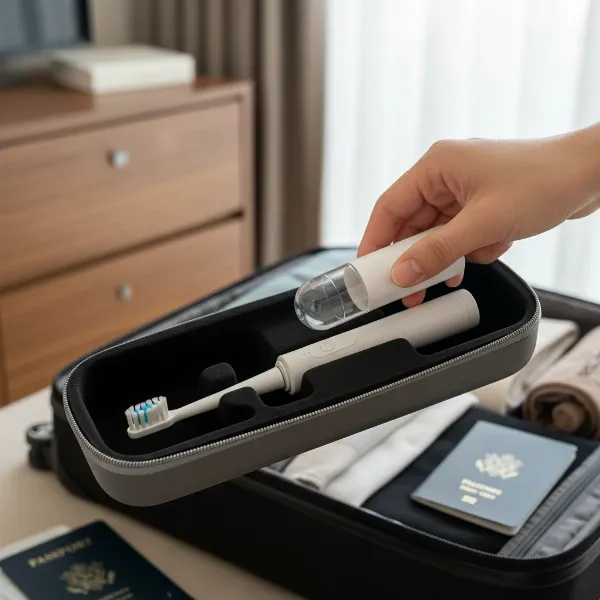 A hand placing a dry electric toothbrush into a hard-shell travel case, ready for air travel, with a clean brush head cap.
Choosing the Right Protection
Protecting your electric toothbrush from physical damage and maintaining hygiene are equally important. A dedicated travel case, often provided by the manufacturer, is your best bet. These cases are typically hard-shelled to absorb impacts and may feature ventilation holes to allow any residual moisture to evaporate. If your brush didn’t come with one, consider purchasing a universal travel case designed for electric toothbrushes. For the brush head, a simple manufacturer’s cap or a clean, dry silicone cover will shield the bristles from contamination and damage. Avoid sealing a wet brush head in an airtight plastic bag, as this can encourage bacterial growth. In a pinch, a clean, dry Ziploc bag can offer some protection, but it won’t prevent crushing.
Where to Pack It: Carry-On vs. Checked Luggage
As discussed, the general recommendation for electric toothbrushes with lithium batteries is to pack them in your carry-on luggage. This allows for immediate access in case of an issue and aligns with FAA safety guidelines regarding lithium battery fire risks. While devices with installed lithium-ion batteries are often permitted in checked bags if they meet size limits, the carry-on option provides an extra layer of security. If you must pack it in checked luggage, ensure it is thoroughly powered off, protected in a hard case, and packed securely amidst soft clothing to cushion it from impact. Never place spare batteries or power banks in checked baggage; they must always be in your carry-on, with terminals protected.
Beyond the Toothbrush: Packing Accessories
Your electric toothbrush is just one part of your comprehensive oral care travel kit. Remember to consider its accompanying accessories to ensure a seamless experience.
Chargers for electric toothbrushes, like other electronics, should ideally be packed in your carry-on bag. This not only keeps them safe from damage but also ensures you have access to them if your checked luggage is delayed or lost. It’s a good practice to keep all your essential electronics and their chargers together in one easily accessible pouch within your carry-on. If you’re bringing extra brush heads, store them in a clean, protective container or their individual caps to maintain their hygiene and prevent damage to the bristles. Don’t forget your travel-sized toothpaste and any mouthwash; these must adhere to the TSA’s 3-1-1 rule for liquids in carry-on bags – containers must be 3.4 ounces (100 milliliters) or less, fit in one quart-sized bag, and be limited to one bag per passenger.
Common Mistakes to Avoid When Traveling with Your Electric Toothbrush
Even experienced travelers can sometimes make simple errors that can complicate their journey or compromise their oral hygiene. Being aware of these common pitfalls can help you avoid them.
One of the most frequent mistakes is forgetting to completely turn off the electric toothbrush or engage its travel lock. An accidentally activated brush can buzz its way through your luggage, draining its battery or, worse, causing minor damage to itself or other items. Another oversight is packing a wet toothbrush head; this creates a humid environment perfect for bacterial proliferation. Ignoring the crucial battery regulations, particularly regarding lithium batteries and spare ones, can lead to your toothbrush being confiscated or causing delays at security checkpoints. Lastly, underestimating the need for adequate protection can result in a broken toothbrush handle or splayed bristles, rendering your device ineffective. Always check your specific airline’s updated policies as regulations can change.
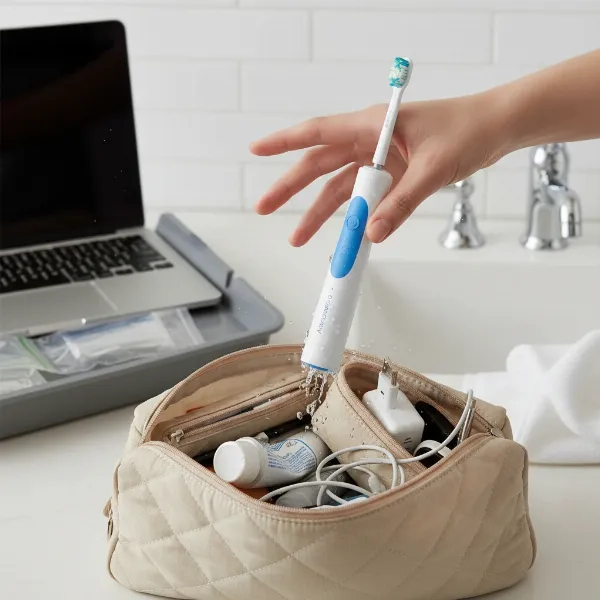 A traveler's hand mistakenly placing a wet, unprotected electric toothbrush into a soft, unorganized travel bag, highlighting common packing errors.
Expert Tips for a Smooth Journey
As an Admin of electrictoothbrushonline.com with over a decade of experience, I’ve seen countless scenarios. Here are a few additional tips to make your electric toothbrush travel experience as smooth as possible:
“Always consider the length of your trip. For shorter getaways, many modern electric toothbrushes hold a charge for weeks, allowing you to leave the charger at home and save space. This small decision can significantly streamline your packing.” – Johnathan Reed, Electric Toothbrush Expert
- Consider a Travel-Specific Electric Toothbrush: Some brands offer compact, battery-powered (often AAA) or USB-C rechargeable travel toothbrushes that are specifically designed for portability and often come with integrated caps. These can be lighter and less bulky than your everyday model.
- Know Your Toothbrush’s Battery Life: Familiarize yourself with how long your fully charged toothbrush lasts. This knowledge will help you decide whether you need to pack the charger or if your brush can go the distance on a single charge.
- Double-Check International Power Adapters: If traveling internationally, remember to bring the appropriate power adapter for your charger. Nothing is more frustrating than a dead toothbrush and no way to recharge it due to an incompatible plug.
Conclusion
Traveling with your electric toothbrush doesn’t have to be a source of stress. By understanding the essential regulations, adopting smart packing strategies, and avoiding common mistakes, you can ensure your electric toothbrush arrives safely and hygienically, ready to maintain your sparkling smile throughout your adventures. Prioritizing proper preparation for your electric toothbrush not only protects your device but also safeguards your oral health, allowing you to truly enjoy every moment of your journey. So, next time you’re planning a trip, will your electric toothbrush be packed and ready for take-off?
Frequently Asked Questions
Can I put my electric toothbrush in my checked bag?
Yes, you can typically put your electric toothbrush in your checked bag, but there’s a significant caveat regarding batteries. If your toothbrush contains a lithium-ion battery, it’s highly recommended to pack it in your carry-on luggage due to potential fire risks. Spare or loose lithium batteries are strictly prohibited in checked bags.
Do I need a special case for my electric toothbrush when flying?
While not strictly mandatory, using a hard-shell travel case for your electric toothbrush is strongly recommended. It provides crucial protection against damage from impacts and prevents accidental activation, helping to preserve both the device and its battery life during transit. Many toothbrushes come with one.
What about the charger for my electric toothbrush?
Electric toothbrush chargers are generally allowed in both carry-on and checked luggage. However, it’s often best practice to pack chargers and other electronics in your carry-on bag to protect them from damage and ensure you have them immediately available if your checked luggage is delayed.
Can an electric toothbrush set off airport security?
An electric toothbrush itself is unlikely to set off airport security. However, if it accidentally turns on inside your bag, the vibration might attract attention during screening. Always ensure your toothbrush is fully powered off and, if available, engage its travel lock feature to prevent accidental activation.
How to keep my toothbrush clean during travel?
To keep your Electric Toothbrush clean while traveling, ensure it’s thoroughly dry before packing. Use a travel cap for the brush head to protect bristles from contamination. Choose a travel case with ventilation if possible, and avoid sealing a damp brush head in an airtight container to prevent bacteria and mold growth.