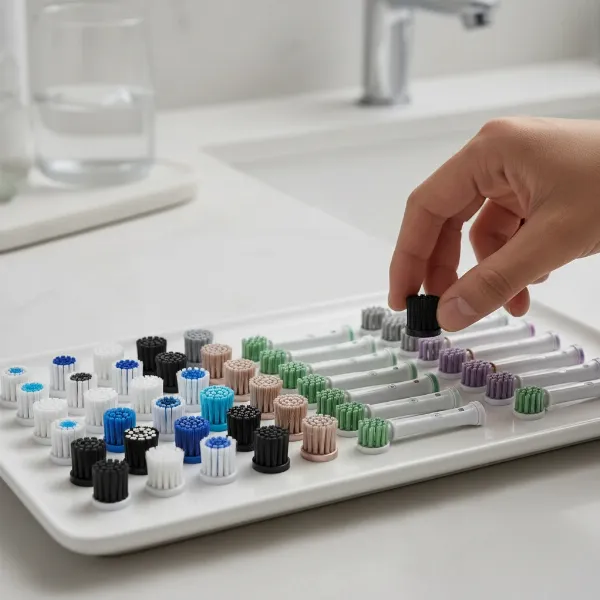
In a world brimming with options, choosing the right electric toothbrush for your oral hygiene is a smart move. But what happens when the very tools designed to protect your teeth and gums turn out to be fakes? Counterfeit electric toothbrush heads, particularly for popular brands like Oral-B and Sonicare, are a growing concern, posing not only a threat to your oral health but also to your investment in quality dental care. Understanding how to differentiate genuine products from imposters is crucial for maintaining your oral health and ensuring your electric toothbrush performs as intended.
Understanding Electric Toothbrush Heads: The Foundation of Your Oral Care
Electric toothbrush heads are precision-engineered components, designed to work seamlessly with their corresponding handles to deliver superior cleaning. Whether you use an oscillating-rotating Oral-B brush or a sonic Philips Sonicare device, the brush head is where the magic happens – transforming vibrations into effective plaque removal. Genuine brush heads feature carefully selected bristle types, optimized patterns, and advanced technologies, like wear indicators and smart chips, all calibrated for maximum efficacy and safety. When these intricate designs are replicated poorly by counterfeiters, the entire cleaning experience is compromised, potentially leading to inadequate hygiene and even damage.
Why Counterfeit Brush Heads Are a Serious Threat
The appeal of lower prices often draws consumers to unofficial sellers, but the seemingly small savings come with significant, often hidden, costs. Counterfeit electric toothbrush heads are typically manufactured in unregulated facilities using subpar materials and shoddy production techniques. This not only means they fail to clean effectively, but they can also introduce a host of dangers, from bristly plastic that scratches gums to mechanical failures that damage your valuable electric toothbrush handle. Recognizing these risks is the first step toward protecting your oral health and wallet.
Spotting Fake Oral-B Electric Toothbrush Heads
Identifying a fake Oral-B brush head requires a keen eye for detail. Genuine Oral-B products are a testament to meticulous engineering, and even slight deviations can be red flags.
Packaging and Branding Cues
|
Our Picks for the Best Electric Toothbrush in 2026
As an Amazon Associate I earn from qualifying purchases.
|
||
| Num | Product | Action |
|---|---|---|
| 1 | Oral-B iO Simple Clean Rechargeable Electric Powered Toothbrush, Pure White with 1 Gentle Care Brush Head and 1 White Travel Case - Automatic Pressure Sensor to Protect Gums - 3 Modes -2 Min Timer |

|
| 2 | Philips Sonicare 4100 Rechargeable Electric Toothbrush, Advanced Plaque Removal, Pressure Sensor, Includes Brush Head Case, White BD5002AZ |
|
| 3 | Philips Sonicare 4100 Series Electric Toothbrush - Sonic Toothbrush with Advanced Sonic Technology, Pressure Sensor, Two Intensity Settings, Smartimer & Quadpacer, Deep Pink, Model HX3681/26 |
|
| 4 | COSLUS Sonic Electric Toothbrush for Adults C40(DY-108Pro): 47000 VPM for Deep Cleaning with Travel Case - 5 Modes for Sensitive Teeth & Brace, Wireless Charging, 6 Brush Heads for Family, Black (1PC) |
|
| 5 | Oral-B iO Simple Clean Rechargeable Electric Powered Toothbrush, Night Black with 1 Gentle Care Brush Head and 1 Black Travel Case - Automatic Pressure Sensor to Protect Gums - 3 Modes - 2 Min Timer |
|
| 6 | Philips Sonicare 1100 Series Electric Toothbrush - Sonic Toothbrush with Advanced Sonic Technology, EasyStart, Smartimer & Quadpacer, White, Model HX3641/02 |
|
| 7 | Oral-B Pro 1000 Rechargeable Electric Toothbrush, White |
|
| 8 | Philips Sonicare 2100 Series Electric Toothbrush - Sonic Toothbrush with Advanced Sonic Technology, Two Intensity Settings, Smartimer & Quadpacer, White, Model HX3661/04 |
|
| 9 | Onlyone Sonic Electric Toothbrush for Adults, Rechargeable Ultrasonic Electric Toothbrush with 8 Brush Heads, Travel Case, Charging Base & Wireless Charging - 5 Modes with Smart Timer |
|
| 10 | Oral-B Pro 1000 Rechargeable Electric Toothbrush, Black |
|
Authentic Oral-B brush heads come in high-quality packaging with clear, crisp printing. Examine the logo: a genuine Oral-B logo will be precisely printed, with a consistent color that resists scratching easily. Counterfeits often feature blurry logos, inconsistent colors, or logos that can be scratched off with minimal effort. Pay attention to the overall packaging quality—flimsy plastic, poorly sealed edges, or misspellings are common indicators of a fake. Some authentic Oral-B heads also feature tiny reflective holograms that are visible under angled light; fakes often have blurry or inconsistently shiny imitations.
Bristle Quality and Appearance
The bristles are your first line of defense against plaque, and their quality is paramount. Genuine Oral-B bristles are tightly packed, uniform in length, and have a distinct, vibrant color. Many Oral-B heads feature indicator bristles that fade over time, signaling when it’s time for a replacement. On counterfeit heads, bristles may appear splayed, unevenly flattened, less densely packed, or have an unnatural color that does not fade as expected, like neon green bristles that retain their hue indefinitely.
The Metal Component and Internal Structure
Look closely at the metal piece located inside the oval cutout or slit on the front of the brush head. On a real Oral-B head, this metal component will be shiny, uniform, and exhibit a consistent screw-like effect, indicating quality manufacturing. Fake brush heads often feature a less polished, uneven, or different material for this component, revealing poor craftsmanship. Additionally, inspect the back of the brush head; genuine Oral-B heads typically have a metal dot flanked by two indentations, while fakes might show a single raised dot or multiple irregular openings.
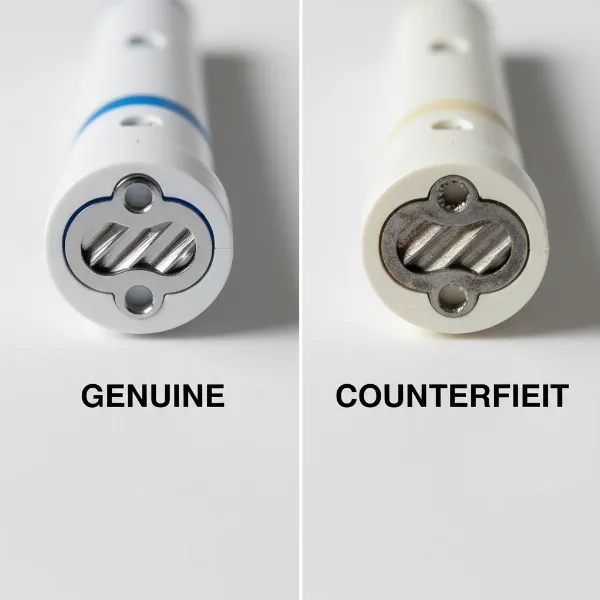 Close-up comparison of genuine and counterfeit Oral-B electric toothbrush heads showing metal component differences.
Fit and Functionality
A crucial test is how the brush head fits onto your electric toothbrush handle. Genuine Oral-B heads should glide on smoothly and securely, without excessive force. Counterfeit heads, due to imprecise molding, may be noticeably harder to attach or remove. When in use, a fake head might exhibit reduced vibration efficiency or even stall completely under light pressure, rendering your powerful electric toothbrush as ineffective as a manual one.
Unique Markings and Engravings
Examine the shaft of the brush head, beneath the Oral-B logo. A genuine head often has a raised or slightly impressed circular mark. A clearly indented circle into the shaft is a strong indication of a fake. For some Oral-B IO series brush heads, authentic versions may feature very small, almost imperceptible numbers engraved within a slot on the front or back, a detail often missing or poorly replicated on counterfeits.
Identifying Counterfeit Sonicare Electric Toothbrush Heads
Philips Sonicare electric toothbrushes utilize sonic technology, and their brush heads are designed with specific features to optimize this cleaning action. Counterfeit Sonicare heads often miss these critical details.
Packaging and Branding
Similar to Oral-B, the packaging of a genuine Sonicare brush head will be professional and high-quality, with clear, sharp graphics and text. The Philips Sonicare logo should be crisp and well-defined. Be wary of any packaging that seems flimsy, has blurry printing, or contains spelling errors. Always compare the branding and design with images from the official Philips Sonicare website.
The RFID Chip (BrushSync)
A standout feature of many modern Sonicare brush heads is the BrushSync technology, which relies on an RFID chip at the base of the head to communicate with the handle. When inspecting a genuine BrushSync-compatible head, you should find a black RFID chip with visible copper wiring at the bottom. Counterfeit Sonicare heads often attempt to mimic this feature with a simple painted black square or even a plastic orange ring with a black paint mark to create the illusion of a chip, lacking the intricate copper wiring. This is one of the most definitive indicators of authenticity.
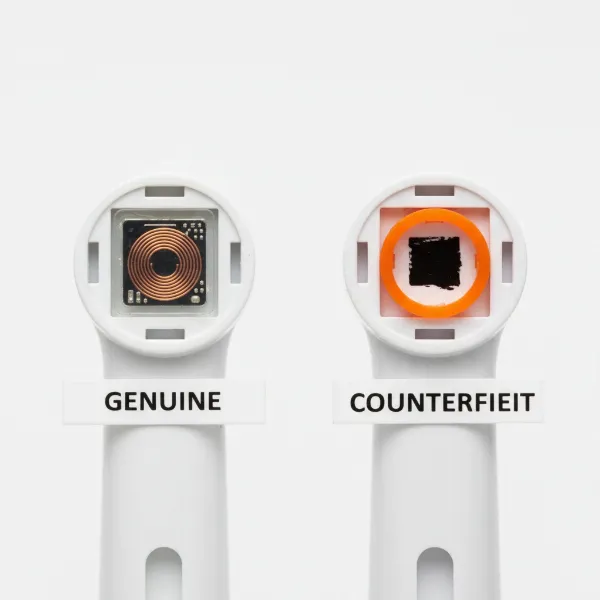 Visual comparison of genuine Sonicare brush head with visible RFID chip and a fake imitation.
Bristle Quality and Wear Indicators
Sonicare bristles are engineered for effective plaque removal while remaining gentle on gums. Genuine Sonicare bristles are dense, evenly cut, and typically fuller in body with well-defined edges. Many Sonicare brush heads incorporate a blue wear indicator line that gradually fades to white over time, signaling replacement. On fake heads, the bristles may be sparse, uneven, or feel unusually stiff. The blue indicator line might be entirely blue on a new fake head, or it might not fade appropriately, failing to provide an accurate replacement reminder.
Fit and Feel
A genuine Sonicare brush head should attach smoothly and securely to your handle, creating a proper seal for optimal sonic vibrations. If a brush head is difficult to slide on or remove, or if it rattles excessively during use, it could be a counterfeit. The precision required for sonic cleaning means that even minor variations in fit can severely impact performance. Look for a “D-shaped” hole for the vibrating metal wand handle on genuine heads; fakes might have an imperfect shape.
Manufacturing Details
Examine the back of the brush head’s neck. While genuine heads may have natural molding marks, a fake might feature a depression that is unusually deep or pronounced. The internal shape of the brush head, visible when looking up into it, can also differ between genuine and fake products. Furthermore, authentic Sonicare heads often have subtle numbers printed on the metal ring at the base; these markings might be less obvious or entirely absent on counterfeits.
The Hidden Dangers: Risks of Using Fake Brush Heads
Using counterfeit electric toothbrush heads goes beyond simply getting a poor clean; it can actively harm your oral health and damage your device. These products are manufactured without any quality control or safety standards.
Firstly, the materials used in fake brush heads are often substandard and can include harmful chemicals not permitted in genuine products. The bristles themselves might be excessively stiff or improperly trimmed, leading to gum irritation, bleeding, and even enamel erosion over time. Poorly anchored bristles can detach during brushing, posing a choking hazard, particularly for children.
Secondly, the efficacy of your electric toothbrush is severely compromised. Counterfeit heads lack the precise engineering of genuine products, resulting in reduced vibration efficiency and less effective plaque removal. This means you might be brushing diligently but still failing to achieve a thorough clean, leading to plaque buildup, cavities, and gum disease.
Finally, the improper fit and low-quality components of fake brush heads can put undue stress on your electric toothbrush handle’s motor, potentially shortening its lifespan or causing irreversible damage. The minor savings on a counterfeit head could lead to the costly replacement of your entire toothbrush.
“Investing in genuine electric toothbrush heads is not just about performance; it’s about protecting your long-term oral health. The subtle differences between authentic and counterfeit products can have a significant impact on cleaning effectiveness and safety.”
Where to Buy Authentic Oral-B and Sonicare Electric Toothbrush Heads
The most reliable way to ensure you’re purchasing genuine Oral-B and Sonicare brush heads is to buy from authorized and reputable retailers.
- Manufacturer’s Official Websites: Both Oral-B and Philips Sonicare have official online stores where you can purchase replacement heads directly. This is often the safest option, guaranteeing authenticity.
- Major Retail Chains: Large pharmacies, supermarkets, and electronics stores like Walmart, Boots, and Costco are generally reliable sources. They have established supply chains directly from the manufacturers. Keep an eye out for sales at these legitimate retailers to get genuine products at a better price.
- Authorized Online Retailers: When shopping online, stick to well-known platforms like Amazon, but always ensure you are buying directly from Oral-B, Philips Sonicare, or a reputable seller listed as “sold by [brand name] and fulfilled by Amazon.” Avoid third-party sellers with suspiciously low prices or inconsistent reviews, as these are often sources of counterfeits.
Always question prices that seem too good to be true, and be wary of sellers offering brush heads far below market value. Prioritizing trustworthiness over the lowest price is a wise decision for your oral health.
Conclusion
The proliferation of counterfeit Oral-B and Sonicare electric toothbrush heads presents a real challenge for consumers seeking effective oral care. By understanding the tell-tale signs of fake products—from packaging anomalies and bristle quality to the presence of RFID chips and internal component integrity—you can better protect your oral health. Genuine brush heads ensure optimal cleaning performance and safety, safeguarding your smile against the hidden dangers of substandard imitations. Remember, investing in authentic products is an investment in your well-being. What steps will you take to ensure your electric toothbrush heads are genuine and truly benefit your oral health?
Frequently Asked Questions
How can I verify the RFID chip on my Sonicare brush head?
To verify the RFID chip on a Sonicare BrushSync head, carefully examine the base of the brush head. A genuine head will have a visible black RFID chip with distinct copper wiring. Counterfeits often use a painted black square or a plastic ring with a black mark, lacking the detailed copper circuitry of an authentic chip.
What are the immediate risks of using a fake Oral-B brush head?
Using a fake Oral-B brush head can lead to several immediate risks, including gum irritation or bleeding due to stiff or poorly cut bristles, ineffective plaque removal, and potential damage to your toothbrush handle from an improper fit. Bristles can also fall out, posing a choking hazard.
Are “compatible” electric toothbrush heads the same as counterfeit ones?
No, “compatible” brush heads are not necessarily the same as counterfeit ones. Compatible heads are usually third-party products designed to fit a specific brand of Electric Toothbrush, but they are marketed under their own brand name. Counterfeit heads, however, are illegal imitations that pretend to be genuine products of the original brand. While some compatible heads can be decent, they often lack the quality control and efficacy of genuine brand-name heads.