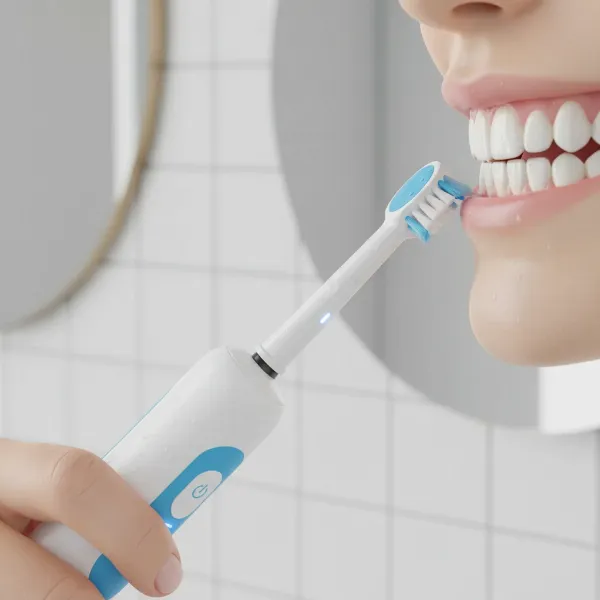
Maintaining optimal oral hygiene is paramount for everyone, but it becomes even more critical when you have dental implants or crowns. These significant investments in your oral health require a specialized approach to cleaning, and choosing the right electric toothbrush can make all the difference. As someone with over a decade of experience in electric toothbrushes, I understand the nuances of keeping your restorations pristine and your gums healthy. This guide will help you navigate the options, ensuring you select a product that protects your dental work and enhances your overall oral care routine.
What is an Electric Toothbrush?
An electric toothbrush is a sophisticated dental tool designed to provide a thorough and consistent cleaning experience, often surpassing what can be achieved with a manual toothbrush. Instead of relying on manual scrubbing motions, electric toothbrushes use motors to rapidly move their brush heads, performing thousands of strokes per minute. This technology allows for more effective plaque removal and can be particularly beneficial for those with limited dexterity or specific oral health needs.
Electric toothbrushes generally fall into a few main categories based on their movement: oscillating/rotating, sonic, and ultrasonic. Each type offers distinct benefits, influencing its suitability for different users and dental conditions. Understanding these differences is the first step toward making an informed choice for your unique oral health profile.
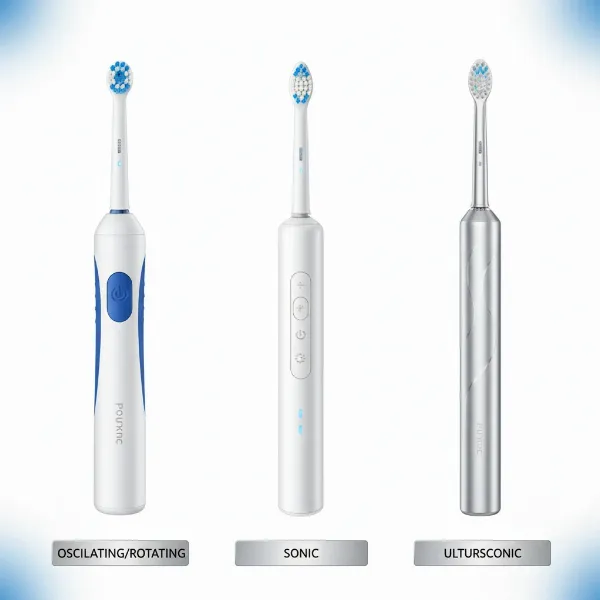 Different types of electric toothbrushes for oral hygiene, showing oscillating, sonic, and ultrasonic models.
Why Electric Toothbrushes are Essential for Implants and Crowns
When you have dental implants or crowns, their longevity and the health of the surrounding gum tissue depend heavily on meticulous oral hygiene. Electric toothbrushes offer several compelling advantages over manual brushing in this regard. Their consistent power and programmed movements remove plaque and bacteria far more effectively, minimizing the risk of complications such as peri-implantitis (inflammation around an implant) or gum disease.
The gentle yet powerful cleaning action of electric toothbrushes helps preserve the integrity of your restorations. Manual brushing, if done too aggressively or incorrectly, can potentially damage the delicate gum tissue around implants or scratch the surface of crowns. Electric toothbrushes, especially those with pressure sensors and soft bristles, are designed to clean thoroughly without causing harm. They ensure that your significant investment in implants and crowns is protected, contributing to their long-term success and your lasting oral health.
Understanding Electric Toothbrush Types for Restorations
Choosing the right type of electric toothbrush is crucial, especially when you have dental implants or crowns. Each technology offers a different cleaning mechanism, impacting gentleness and effectiveness around your restorations.
Oscillating/Rotating Electric Toothbrushes
These toothbrushes feature small, round brush heads that oscillate (move back and forth) and often pulsate. They are highly effective at breaking up and sweeping away plaque from each tooth surface.
- Advantages: Oscillating/rotating brushes are known for their powerful cleaning action, effectively removing plaque. They are generally widely available and come in various price points.
- Disadvantages: Some users, particularly those with very sensitive gums or newly placed implants, might find the vigorous motion slightly aggressive if not used correctly. It’s essential to let the brush do the work and not apply too much pressure.
|
Our Picks for the Best Electric Toothbrush in 2026
As an Amazon Associate I earn from qualifying purchases.
|
||
| Num | Product | Action |
|---|---|---|
| 1 | Philips Sonicare 2100 Series Electric Toothbrush - Sonic Toothbrush with Advanced Sonic Technology, Two Intensity Settings, Smartimer & Quadpacer, White, Model HX3661/04 |

|
| 2 | Onlyone Sonic Electric Toothbrush for Adults, Rechargeable Ultrasonic Electric Toothbrush with 8 Brush Heads, Travel Case, Charging Base & Wireless Charging - 5 Modes with Smart Timer |
|
| 3 | Philips Sonicare 4100 Rechargeable Electric Toothbrush, Advanced Plaque Removal, Pressure Sensor, Includes Brush Head Case, White BD5002AZ |
|
| 4 | Philips Sonicare 4100 Series Electric Toothbrush - Sonic Toothbrush with Advanced Sonic Technology, Pressure Sensor, Two Intensity Settings, Smartimer & Quadpacer, Deep Pink, Model HX3681/26 |
|
| 5 | Oral-B iO Simple Clean Rechargeable Electric Powered Toothbrush, Pure White with 1 Gentle Care Brush Head and 1 White Travel Case - Automatic Pressure Sensor to Protect Gums - 3 Modes -2 Min Timer |
|
| 6 | Oral-B Pro 1000 Rechargeable Electric Toothbrush, White |
|
| 7 | Oral-B Pro 1000 Rechargeable Electric Toothbrush, Black |
|
| 8 | Philips Sonicare 1100 Series Electric Toothbrush - Sonic Toothbrush with Advanced Sonic Technology, EasyStart, Smartimer & Quadpacer, White, Model HX3641/02 |
|
| 9 | Oral-B iO Simple Clean Rechargeable Electric Powered Toothbrush, Night Black with 1 Gentle Care Brush Head and 1 Black Travel Case - Automatic Pressure Sensor to Protect Gums - 3 Modes - 2 Min Timer |
|
| 10 | COSLUS Sonic Electric Toothbrush for Adults C40(DY-108Pro): 47000 VPM for Deep Cleaning with Travel Case - 5 Modes for Sensitive Teeth & Brace, Wireless Charging, 6 Brush Heads for Family, Black (1PC) |
|
Sonic Electric Toothbrushes
Sonic toothbrushes use high-frequency, side-to-side vibrations to clean teeth. These vibrations create fluid dynamics that extend beyond the bristles’ tips, reaching areas just beyond where the bristles touch.
- Advantages: Sonic toothbrushes are highly recommended for individuals with dental implants and crowns due to their gentle yet effective cleaning action. The high-frequency vibrations effectively dislodge plaque and bacteria without aggressive scrubbing, reducing wear on both natural teeth and restorations. They are excellent for sensitive teeth and gums, reaching into tight spaces around implants and under crowns.
- Disadvantages: They tend to be more expensive than oscillating/rotating models, and some users might initially find the unique vibration sensation different from what they’re used to.
Ultrasonic Electric Toothbrushes
Ultrasonic toothbrushes represent the most advanced technology, operating at frequencies far beyond sonic vibrations, often imperceptible to human touch. They use ultrasonic waves to disrupt bacterial chains and remove plaque.
- Advantages: These brushes offer an exceptionally deep and gentle clean, reaching microscopic areas. The non-contact cleaning effect can be highly beneficial for extremely sensitive areas or very fresh surgical sites, although direct bristle contact is still needed for debris removal.
- Disadvantages: Ultrasonic toothbrushes are typically the most expensive option and are less common in the market compared to sonic or oscillating/rotating types. Their specialized nature means fewer models are available.
Comparison Table: Electric Toothbrush Types
| Feature | Oscillating/Rotating | Sonic | Ultrasonic |
| :—————– | :————————— | :—————————– | :————————————- |
| **Price Range** | Low to Medium | Medium to High | High |
| **Vibration** | Stronger, mechanical motion | High-frequency vibrations | Very high-frequency waves (often imperceptible) |
| **Cleaning Style** | Direct scrubbing & pulsation | Fluid dynamics, gentle sweep | Disrupts bacteria, very gentle |
| **Effectiveness** | Very good | Excellent, especially for restorations | Superior, deepest clean |
| **Gentleness** | Moderate | High | Very High |
| **Features** | Basic to Advanced | Diverse, including smart features | Specialized, often limited |
| **Popularity** | Widespread | Very popular | Less common |
Key Features to Look for in an Electric Toothbrush for Implants and Crowns
When investing in an electric toothbrush for your implants and crowns, certain features can significantly enhance your oral hygiene routine and protect your dental work. Prioritizing these elements will ensure you get the most out of your brush.
- Soft or Extra-Soft Bristles: This is non-negotiable. Hard bristles can abrade delicate gum tissue around implants and scratch the surface of crowns, leading to sensitivity or damage. Always opt for brush heads clearly labeled “soft” or “extra-soft.”
- Pressure Sensor: An invaluable feature that alerts you if you’re brushing too hard. Excessive pressure is detrimental to both natural teeth and restorations, potentially causing gum recession, enamel wear, and stress on implants or crown margins. A visual or audible warning helps you maintain the correct, gentle pressure.
- Built-in Timer and QuadPacer: Most electric toothbrushes come with a 2-minute timer, the dentist-recommended brushing duration. A “QuadPacer” further divides this into 30-second intervals for each quadrant of your mouth, ensuring uniform cleaning across all areas, including around your implants and crowns.
- Multiple Cleaning Modes: Look for brushes offering different modes, such as a “sensitive” mode. This setting typically provides a gentler vibration, ideal for the delicate areas around new implants, sensitive gums, or when adjusting to an electric toothbrush.
- Compact Brush Head Size: A smaller, compact brush head allows for better maneuverability, especially in hard-to-reach areas around individual implants or the back of your mouth where crowns are often placed. This ensures thorough cleaning without missing spots.
- Long Battery Life: A toothbrush with a decent battery life (at least 2-3 weeks on a single charge) offers convenience, especially for travel.
- Reputable Brand and Dentist Recommendation: Brands like Philips Sonicare and Oral-B are widely recommended by dental professionals for their effectiveness and safety. Consulting your dentist or hygienist for their specific recommendations based on your oral health is always a wise step.
- Suction Capability (for specific needs): For individuals with swallowing difficulties (dysphagia) or limited mobility, specialized electric toothbrushes with integrated suction, such as the Bluereo G100 or G100 Pro, are game-changers. This feature removes water and paste in real-time, reducing choking risks and simplifying assisted brushing.
Top Recommended Electric Toothbrushes for Implants and Crowns
Based on my experience and industry insights, here are some of the top electric toothbrushes that excel in protecting and maintaining dental implants and crowns:
- Philips Sonicare ProtectiveClean Series (e.g., 4100 Series, 5100 Series): These sonic toothbrushes are highly praised for their gentle yet effective cleaning. They typically feature pressure sensors, multiple brushing modes (including sensitive), and smart timers. The sonic technology is ideal for cleaning around implants without causing damage, and their soft bristles are perfect for crowns. Many dental professionals recommend Sonicare for patients with restorations.
- Oral-B iO Series: The Oral-B iO series combines the oscillating-rotating technology with micro-vibrations, delivering an exceptionally smooth and quiet experience. With smart pressure sensors, an interactive display, and various cleaning modes, the iO series offers a personalized and thorough clean. While oscillating-rotating, the iO’s gentle micro-vibrations make it safe for implants and crowns, with many users preferring its unique feel.
“For patients with dental implants and crowns, I often recommend electric toothbrushes that offer both effective plaque removal and gentle care. Sonic technology, in particular, has proven beneficial for maintaining the health of the peri-implant tissues.” – Dr. Emily Chen, Prosthodontist
- Bluereo G100/G100 Pro Electric Suction Toothbrush: For those with more complex needs, such as individuals recovering from oral surgery, managing dysphagia, or experiencing limited mobility, the Bluereo G100 and G100 Pro are revolutionary. These specialized electric toothbrushes combine sonic vibrations with built-in suction, allowing for fluid management during brushing. This prevents pooling of water and toothpaste, reducing choking risks and making oral care safer and more dignified, especially for assisted brushing. They are specifically designed with soft bristles and medical-grade materials to support implant health.
When considering a specific model, remember to check for the availability of soft or extra-soft brush heads and ensure it includes a pressure sensor to safeguard your precious dental work.
How to Use Your Electric Toothbrush Correctly with Implants and Crowns
Using an electric toothbrush effectively with implants and crowns goes beyond just pressing a button. Proper technique is key to maximizing its benefits and ensuring the longevity of your dental restorations.
First, apply minimal pressure. Let the electric toothbrush do the work. Unlike manual brushing, where you might feel the need to scrub, an electric toothbrush simply needs to be guided gently along your gumline and over each tooth surface. The pressure sensor (if available) will be your guide, alerting you if you’re pressing too hard.
Next, focus on the gumline and around your restorations. Angle the brush head slightly towards the gumline where the tooth meets the gum, and allow the bristles to gently clean this critical area. For implants, pay special attention to the abutment, the part connecting the implant to the crown, as plaque can easily accumulate here. For crowns, ensure you clean all surfaces, including the margins where the crown meets your natural tooth structure.
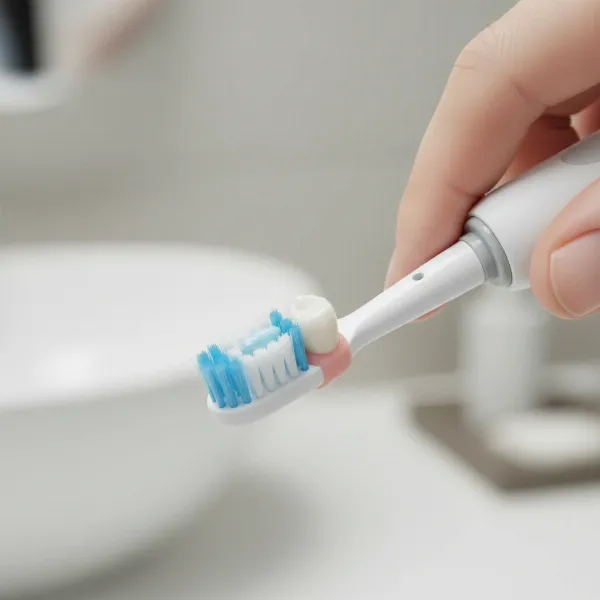 Close-up of an electric toothbrush gently cleaning around a dental implant or crown at the gumline.
Brush for the recommended 2 minutes, divided into 30 seconds per quadrant of your mouth (upper right, upper left, lower right, lower left), as indicated by your brush’s timer or QuadPacer. This ensures every area, including your implants and crowns, receives adequate attention.
Maintain your brush heads. Electric toothbrush heads should be replaced every three months, or sooner if the bristles become frayed. Worn bristles are less effective and can be abrasive. After each use, rinse the brush head thoroughly under running water to remove any toothpaste residue and allow it to air dry.
Finally, remember that while electric toothbrushes are highly effective, they are part of a comprehensive oral hygiene routine. Don’t neglect interdental cleaning. Use dental floss, interdental brushes, or a water flosser daily to clean between your teeth and around your implants where bristles cannot reach. These steps are crucial for preventing plaque buildup and maintaining the health of your gums and restorations.
Where to Buy a Reliable Electric Toothbrush
Finding a trustworthy source for your electric toothbrush is just as important as choosing the right model. When you’re ready to invest in an electric toothbrush for your implants and crowns, consider these reputable avenues:
- Dental Offices and Clinics: Your dentist or dental hygienist often sells recommended electric toothbrushes directly. Buying from them ensures you’re getting a product they endorse, and they can provide personalized advice on its use for your specific dental work.
- Major Electronics Retailers: Stores like Best Buy or online giants like Amazon and Walmart offer a wide selection of electric toothbrushes from leading brands. Always check for authorized sellers to ensure product authenticity and warranty validity. Reading recent customer reviews can also provide valuable insights.
- Pharmacy Chains: Pharmacies such as CVS, Walgreens, or Boots typically carry a good range of popular electric toothbrush brands. These can be convenient options, especially when looking for replacement brush heads.
- Direct from Manufacturer Websites: Purchasing directly from brands like Philips Sonicare or Oral-B ensures you receive genuine products, often with full manufacturer warranties and access to their latest models and exclusive deals.
- Specialty Oral Care Stores: Some online or physical stores specialize in oral hygiene products. These retailers might offer a broader range of specialized toothbrushes or accessories, potentially including niche brands that cater to specific needs like those with suction capabilities.
Always prioritize purchasing from sources that offer clear return policies and warranties. A good electric toothbrush is an investment in your oral health, and knowing you have support if needed adds peace of mind.
Conclusion
Choosing the best electric toothbrush for dental implants and crowns is a significant step towards safeguarding your oral health and prolonging the life of your valuable restorations. We’ve explored how vital electric toothbrushes are for superior plaque removal and gentle care, especially with soft bristles and sonic technology. Features like pressure sensors, timers, and multiple cleaning modes are not just luxuries but necessities for protecting your dental investment. Whether you opt for a popular sonic model like Philips Sonicare, an innovative oscillating-rotating design from Oral-B, or a specialized solution like Bluereo with suction capabilities, the key lies in making an informed choice tailored to your individual needs. By committing to consistent, proper brushing with the right tool, you empower yourself to maintain a healthy, confident smile for years to come. What step will you take today to upgrade your oral care routine?
Frequently Asked Questions
Can I use any electric toothbrush if I have dental implants or crowns?
While most modern electric toothbrushes are safe for implants and crowns, it’s best to choose models specifically designed for gentle cleaning. Look for soft bristles, pressure sensors, and sonic technology to ensure effective plaque removal without damaging your restorations or irritating sensitive gum tissue.
How often should I replace electric toothbrush heads when I have crowns or implants?
You should replace your Electric Toothbrush head every three months, or sooner if the bristles appear frayed or worn. Worn bristles are less effective at cleaning and can be harsher on your gums and dental work, potentially compromising your oral hygiene.
Is a pressure sensor really necessary for an electric toothbrush used with implants and crowns?
Absolutely. A pressure sensor is a crucial feature, especially for users with implants and crowns. It helps prevent you from brushing too hard, which can lead to gum recession around implants, potential damage to crown margins, and unnecessary wear on your natural teeth.
Are sonic electric toothbrushes better than oscillating-rotating ones for implants?
Many dental professionals recommend sonic toothbrushes for implants and crowns due to their gentle, high-frequency vibrations that effectively dislodge plaque without aggressive scrubbing. However, advanced oscillating-rotating models like the Oral-B iO series, with their micro-vibrations and smart features, are also considered safe and effective, with the choice often coming down to personal preference for cleaning sensation.